








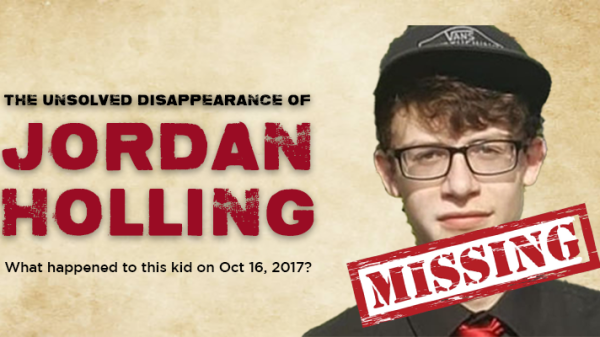












At around two in the morning on October 16, 2017, seventeen-year-old Jordan Holling left a friend’s house on 16th Avenue in Campbell River and started walking back toward his mother’s place. It was not far, and it was not some hike into the backcountry either, which is why I keep coming back to this case more than some of the others. He was in Campbellton, close to Highway 19, with houses, businesses, industrial lots, the river, and little patches of forest all mixed together in a fairly small area. People were still driving through there; somebody was probably working late, and there were homes close enough that you would think at least one person saw him.
Jordan had worked at the local A&W earlier that evening and then spent some time with friends. Nothing unusual there. He was expected home afterward, but he never arrived, and when he also failed to show up for work later that day, his family knew this was not just him staying out longer than expected.
The last confirmed image of him was taken near the highway at around two in the morning. He was wearing dark-framed glasses, a grey sweatshirt, black jeans and black-and-red shoes. Police searched, search-and-rescue went out, family members and volunteers checked the roads, the river and the nearby woods, but they could not find anything that properly carried the timeline past that camera image.
That is the part that really gets me, because when people hear that Jordan was last seen near Highway 19, I think they picture some empty highway in the middle of a forest where nobody would be around at that hour. Campbellton is not like that. He was still inside Campbell River, and even if it was two in the morning, there would have been traffic, people leaving work, trucks going through, and maybe somebody standing outside one of those businesses. It is completely possible that somebody saw him and did not think anything of it, but it is also possible someone saw something they have never spoken about.
Jordan’s name now appears almost every time people talk about Vancouver Island’s missing men. I have seen that phrase so much on Reddit, Facebook, podcasts, and local pages that it starts to sound like an official police category, even though these cases are all over the place once you actually read them. Some of the people later came home alive, some were found dead, and others like Jordan are still missing without a body, a crime scene, or any confirmed movement after one final ordinary moment.
Then you start reading the comments, and suddenly there is a serial killer, human trafficking, bikers, corrupt police, hidden properties, and people claiming the entire Island already knows the truth. Some of them write with such confidence that you almost believe they must have seen it themselves, but then you ask where the information came from, and it usually goes back to another comment, somebody’s cousin, or a story heard years ago at a bar.
I cannot say they are all false, as some of those tales might actually have some truth to them, because that would be just as dishonest as saying they are all true. But I also noticed how quickly one rumor becomes five separate “sources” online when, in reality, everybody may have heard it from the same person.
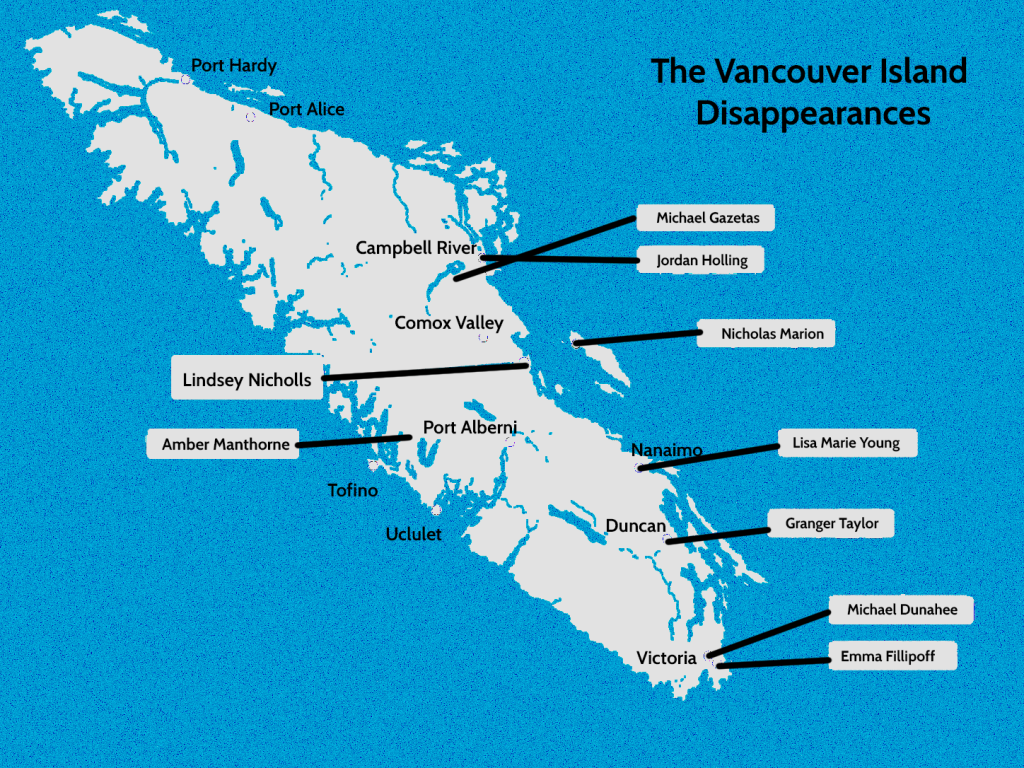
A list of some of the missing people of Vancouver Island
The other explanation is that Vancouver Island itself is very good at hiding people, and I know that sounds like an easy answer until you actually live here. You can be driving through a normal neighbourhood and ten minutes later there are logging roads, steep ground, water and forest going in every direction. A person can fall below a road and be completely hidden from traffic, and vehicles have been found years later in places people drove past all the time.
But Jordan was not driving into the mountains or heading down some old logging road. He was walking home through Campbell River, and that is why I cannot make the wilderness explanation sit comfortably with me in his case. Maybe he went toward the river, maybe he accepted a ride, maybe he met somebody he knew or crossed paths with somebody he did not. I have no idea, and neither does anyone outside the investigation, but it still feels insane that a teenager could disappear during such a short walk and leave almost nothing behind.
There have also been cases on the Island that looked like obvious crimes at first and turned out to be something completely different. A vehicle is found running with nobody inside, and people assume an attack. Blood is found in a van, and everyone starts looking for a killer. Somebody vanishes in the woods, and people decide another person must have taken them. Then months or years later, a body, a vehicle, or even the missing person is found, and the whole story people built around the disappearance falls apart.
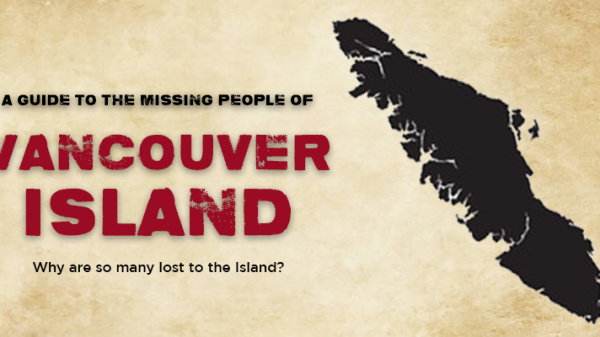
That is why the map can be dangerous if you stare at it for too long. You place Jordan near Campbell River, Michael Gazetas near the Courtenay and Gold River route, Ian Indridson in Victoria, and Nicholas Marion near Youbou, and it starts looking like they are all parts of one thing. I have thought that myself while researching this. I would be lying if I said I had not. The circumstances are not exactly the same, but all cases that I would be writing about in this blog today reach the same point where reliable information suddenly ends, and after reading enough of them, that blank starts to feel like a connection even when there may not be one.
The problem is that once the theory becomes bigger than the cases, Jordan stops being Jordan. He becomes the Campbell River pin on the map. Michael becomes the red Ford Ranger driving away from civilization; Ian becomes the man in crisis in the last scene somewhere in Victoria, and Nicholas becomes the shirt found during the search. Everything else about their lives gets pushed aside because one detail is useful for proving whatever theory somebody already believes. If one day police find something that connects him to another case, then that connection should be taken seriously, but it has to come from evidence and not just because two people disappeared near the same highway.
And honestly, taking away the serial-killer rumors does not make Jordan’s case less disturbing to me. He left his friend’s house, started walking home, and disappeared somewhere inside Campbell River before he got there. Eight years later, his family was still waiting, the investigation was still open, and nobody could explain what happened during a walk that should have taken only a few minutes.
The Many Disappearances of Vancouver Island
One of the biggest problems with understanding these disappearances is that most people picture Vancouver Island through the places where we actually live. Victoria, Duncan, Mill Bay, Ladysmith, Nanaimo, Parksville, Courtenay, Campbell River, Port Hardy, and the long line of communities connected by the Island Highway. If you stay near those areas, the Island can feel much more populated and accessible than it really is.
But that picture is extremely misleading. The moment you leave the commercial roads and residential neighborhoods, everything changes very quickly. There are mountains, lakes, ravines, old industrial sites, logging roads, deactivated roads, private timberland, and enormous stretches of forest where almost nobody goes unless they work there, hunt there, or already know the area. Even in places like Courtenay or Campbell River, someone can walk away from a residential street, cross one road, enter a trail or patch of forest and suddenly become almost impossible to see from above.
That is something I did not fully understand before living here.
The larger Vancouver Island and Coast economic region covers more than 84,000 square kilometers, although that number also includes coastal territory beyond the Island itself. Its 2021 population density was only around ten people per square kilometer. It is not a perfect measurement for Vancouver Island alone, but it still shows the basic problem. Most people are packed into narrow sections along the eastern side, while huge areas between and behind those communities are difficult to access.
Some roads are privately controlled. Others are gated depending on the season. Logging roads change names, disappear from public maps, or are known by completely different names depending on whether you ask a forestry worker, local resident, or search volunteer. A road that appears open on one map may be washed out, blocked or overgrown in reality.
Then there is the way people search.
Searchers naturally look along roads, trails, shorelines and obvious routes because that is where a normal person is expected to go. But a missing person may not be thinking normally by that point. Someone who has fallen, suffered a head injury, become hypothermic, panicked, experienced psychosis or taken drugs may move in a direction that makes no sense to anyone looking afterward.
They may also stop moving much sooner than people assume. Dense salal can hide someone almost directly beside a trail. Fallen trees create holes and cavities beneath them. Ravines disappear under tree cover. A person can be only a few meters away and still be completely invisible. Water makes it even worse because lakes, rivers and the ocean do not leave a clear record of where someone entered or where the body will eventually move.
Several resolved cases from Vancouver Island show how badly location can fool an investigation. Easha Rayel and James Evans were believed to have reached the mainland after they disappeared, partly because people reported seeing them elsewhere. Their car was eventually found in a ravine near the road leading to the Swartz Bay ferry terminal. It had been close to a heavily traveled route the entire time, hidden by terrain and vegetation, while the investigation had already expanded far beyond it.
Melissa McDevitt disappeared during a hike in the Sooke area in 2022. There were extensive searches, yet her remains were not found until 2023, hidden in dense vegetation. Colin Court disappeared while fishing at Cowichan Lake in 2019. Searchers did not recover him at the time. His body was found almost one year later by a specialized dive team.
None of this means every missing person on Vancouver Island died accidentally. That is not the point. The point is that a failed search does not prove the person left the area. It does not prove someone moved them. It does not prove that the police searched the wrong place due to incompetence. Sometimes a person can remain inside the search zone while dozens or even hundreds of people pass nearby without seeing them.
The statistics also need to be handled carefully. In 2025, British Columbia recorded the highest rate of missing-adult reports in Canada, with 249 reports for every 100,000 people. In 2024, the rate was 254.
Those numbers sound massive, and they are often used as evidence that something unusual must be happening here. But they are reports, not a count of people who disappeared permanently. The same person can generate more than one report, especially in cases involving repeat runaways, mental-health crises, homelessness or unstable living situations.
Most missing-person cases are also resolved very quickly. The RCMP states that between 70,000 and 80,000 people are reported missing across Canada during a typical year, and most are found within seven days.
The people who remain missing are only a small part of that much larger number. That does not make their cases less important. It means the raw statistics cannot be used to prove that British Columbia has hundreds of people being abducted by criminals every year. The majority are found. The disturbing group is the smaller number who are not.
Statistics alone also cannot explain why British Columbia produces so many missing-person reports in the first place.
The province has major cities, remote communities, long highways, isolated logging areas and a huge amount of wilderness. It also has an unaffordable housing market, a severe toxic-drug crisis and large numbers of people moving between communities for work, recreation or simply somewhere to live. Some people stay in vehicles, camps, shelters or temporary housing and may not have one person who immediately notices when they stop appearing.
There are also families who have lost contact long before someone officially goes missing. Some people distrust police. Others are involved in drugs or criminal environments and may avoid speaking openly even when they know something. An adult may disappear for days before anyone reports it because friends assume they are somewhere else, family members believe they need space or nobody is sure who should make the call.
By then, phones are dead, surveillance footage may be gone, and witnesses have already forgotten what they saw. So yes, British Columbia has a high number of missing-person reports. Vancouver Island also has an environment where people can become difficult to locate very quickly. Those two things matter.
What happens after someone is reported missing on Vancouver Island, BC?
Another thing I noticed while going through all of these cases is how differently people imagine a missing-person investigation from how it actually works. Online, it is usually described as though police either launched a full search or did absolutely nothing. The case is active or abandoned. The RCMP cares, or they do not. In reality, it seems to change constantly depending on what information exists, how much danger the person may be in, and what police are legally allowed to access.
There is also no rule requiring someone to be missing for 24 or 48 hours before the police will take a report. That old idea still appears constantly in movies, comments and family discussions, but British Columbia’s current policing standards require police to accept the report and begin investigating promptly. It does not matter whether the person is an adult, has disappeared before, lives in another jurisdiction, or has a difficult relationship with the person reporting them.
The first stage can look boring from the outside because a lot of it involves collecting information. But that information determines where the police search and what they can request afterward. They need a recent photograph, clothing description, medical history, vehicle information, phone details, banking information, and the most reliable version of when the person was last seen. They will also ask whether the person has disappeared before, whether they were suicidal, whether there was domestic violence, addiction, cognitive impairment, conflict or any reason to suspect that someone else was involved.
A person can be classified as high risk even when there is no evidence of a crime. Someone wandering during psychosis, severe anxiety, dementia, or suicidal distress may already be in immediate danger without any offender entering the story.
The last confirmed sighting is probably one of the most important parts, and the word confirmed matters more than people realize.
Families understandably tell police what they believe happened last. Maybe the person sent a text saying they were going somewhere. Maybe a friend assumes they left after a conversation. Maybe someone heard secondhand that they were seen at a store. But a text message is not the same as verified surveillance footage. An assumption is not the same as someone watching the person walk away. A phone location, bank transaction, camera image, or reliable witness can completely change the search area.
This is how a case can move in the wrong direction without anyone necessarily lying. Someone reports a sighting in another town, police follow it, and months later it turns out the person never left the original area. We saw something similar with Easha Rayel and James Evans, where people believed they had reached the mainland while their vehicle was actually hidden in a ravine near the road to Swartz Bay.
Police in British Columbia can also seek private records through the Missing Persons Act. Depending on the circumstances, that may include phone information, banking activity, health records, travel records or information held by other companies. But those requests, court orders and emergency demands are usually not posted online for everyone to inspect.
A family may not hear anything about the missing person’s phone and assume police never checked it. People online may say the RCMP refused to trace a device, even though investigators may have been legally prevented from describing what they obtained. They may also withhold the result because releasing it would reveal where they are looking or alert someone they are investigating.
At the same time, privacy does not disappear just because an adult is reported missing. Adults are legally allowed to cut contact with their families, move somewhere else, and live in a way their relatives may not understand. If police locate the person alive and determine that they are safe, they may only be able to tell the family that the person has been found. They may not be allowed to disclose the address, circumstances, or even why the person left.
I can imagine how terrible that would feel for a family. From their perspective, the person disappeared, and the system later confirmed they were alive without actually returning them or explaining anything. Brandon Cairney’s case became an extreme version of this. He was identified through fingerprints after almost five years, but reportedly denied being Brandon and continued using another identity. Even being physically located did not produce the simple ending most people would expect.
Search and rescue is also different from the criminal investigation people imagine happening at the same time. Search teams work outward from the last reliable point using terrain, weather, expected travel speed and the behavior of missing people in similar conditions. Dogs, aircraft, drones, boats and volunteers are sent into areas based on the chance of finding something, not simply because a location feels emotionally important.
A search can be suspended without the case being closed. This is something that families and the public often interpret as police giving up. During the first few days, there may be helicopters, command centers, search lines, maps, and constant activity. Then the visible search ends, everyone leaves, and the family is still standing there with the exact same emergency.
Police may still be reviewing tips, comparing records, checking databases, and waiting for new information, but none of that is as visible as fifty people walking through the forest. A family sees the helicopters disappear and understandably feels abandoned, even if the file technically remains open.
That does not mean every decision to stop searching is correct. Search areas can be wrong. Sightings can mislead investigators. Weather, cost, staffing and jurisdiction can affect what is done. But a suspended ground search does not prove the missing person is not still somewhere nearby. Melissa McDevitt was found in dense vegetation after extensive search efforts. Colin Court remained in Cowichan Lake until a specialized dive team recovered him almost a year later.
Sometimes the person is still inside the area everyone believes was already searched. Older cases can also be reopened or reviewed when technology improves. DNA can be compared with unidentified remains. Old phones and computers can sometimes be examined using methods that did not exist when the person disappeared. Records stored in different jurisdictions can finally be searched together.
This matters because British Columbia still has unidentified human remains. It is possible for a person to be found without anyone immediately knowing who they are, while their missing-person file continues somewhere else under their name. The two records may exist for years without being connected.
That is why families push so hard for dental records, fingerprints, and DNA samples. Those things do not magically solve the disappearance, but they make it less likely that the person will remain unidentified if remains are eventually recovered. Lindsey Nicholls’s mother understood that long before the national DNA databank became a reality.
Publicity is another strange part of these investigations. Families usually want everything released because more information means more people looking. Police may deliberately hold details back because only the genuine witness or offender should know them. A hidden fact can help investigators decide whether someone is telling the truth. Releasing it too early could damage a prosecution, frighten a witness or cause a suspect to destroy evidence.
So when the police refuse to answer a question, it does not automatically mean they never investigated it. But the opposite is also true. We cannot assume every decision is reasonable just because police made it.
Families across British Columbia have documented poor communication, delayed recognition of foul play, discriminatory assumptions, and leads that were not followed properly. Missing-person standards were strengthened because older practices were inconsistent and, in some cases, completely failed vulnerable people. There are families who were told an adult probably left voluntarily when the actual circumstances were far more serious.
Police can have legitimate reasons for withholding information, and police can still make terrible mistakes. An investigation can continue quietly while a family is treated poorly. A search can be based on reasonable evidence and still focus on the wrong place.
That is why I think the real question should not simply be, “Did the RCMP do anything?”
What did they do? When did they do it? What information did they have at the time? Did they check the phone, vehicle, bank account or surveillance footage? Did another agency have jurisdiction? Was a warrant required? Did a new lead change the search area? Was there another reasonable step they could have taken but did not?
Those questions are much harder than calling every officer corrupt or dismissing every family complaint as emotional. But they are also the only questions that may actually show where an investigation went wrong.
Saying “the police know” does not help anyone unless we can explain what they supposedly know and how they learned it. Saying “the police did nothing” is just as useless unless we can identify the action they failed to take.
The missing person deserves something more serious than either accusation.
History of Bizarre Disappearances on Vancouver Island in the Late 1900s
Granger Taylor’s disappearance is probably one of the strangest and most famous missing-person cases on Vancouver Island, mostly because of the note he left behind.
On November 29, 1980, thirty-two-year-old Granger left his parents’ home near Duncan after writing that he was going on a forty-two-month journey aboard an alien spacecraft. That sounds like the beginning of a science-fiction story, but Granger was not some unknown drifter who suddenly appeared in the Cowichan Valley. He had grown up there; people knew him, and he had already become something of a local legend because of what he could build.
Granger was a gifted mechanic and a largely self-taught engineer. He restored old machinery, rebuilt a steam locomotive, repaired an aircraft, and constructed a full-sized flying-saucer structure in his family’s yard. He was clearly fascinated by machines, space, and the possibility of extraterrestrial life, but he was also someone capable of taking complicated mechanical objects apart and putting them back together.
Then, during a severe storm, he drove away in his truck and disappeared.
Neither Granger nor the vehicle was ever conclusively found. Years later, wreckage discovered near Mount Prevost was connected by some investigators and members of his family to an explosion. That created the possibility that Granger had driven into the area and died there, perhaps deliberately. But the debris did not produce a publicly conclusive identification, and no confirmed remains brought the case to an end.
The note ensured the disappearance would never be treated as an ordinary missing-person case.
Some people believe Granger was abducted by aliens. Others think he successfully left Earth, was recruited by a secret government program, or discovered something he was not supposed to know. There are documentaries, paranormal discussions and endless retellings of the brilliant mechanic who built a flying saucer and then vanished into the sky.
I understand why that version became popular. It is almost too perfect. A man fascinated by UFOs builds his own saucer, writes that he is leaving aboard an alien spacecraft, and disappears during a violent storm. If this were written as fiction, people would probably say it was too obvious. But the real mystery is not whether Granger traveled into space. It is much more practical.
Where is the truck? What exactly was found near Mount Prevost? Was the debris ever conclusively tied to him? And if Granger died there, why has nobody been able to prove it beyond doubt?
Granger was a real person with a family, a history, unusual talents, and possibly serious personal struggles near the end of his life. Over time, almost everything about him became compressed into one sentence: the man who built a UFO and disappeared. The strange detail became the label, the label became the theory, and the theory survived long after the investigation stopped producing anything new.
The same thing happens in many of the later cases in this article. One detail takes over everything else. Jordan Holling becomes the teenager last seen near Highway 19. Michael Gazetas becomes the man whose red truck vanished. Laura Huebner becomes the woman who sent the sailboat photograph. Nicholas Marion becomes the visitor whose shirt was found in the forest.
Eleven years after Granger disappeared, Vancouver Island faced another case that would become known across the country.
On March 24, 1991, four-year-old Michael Dunahee disappeared from the playground at Blanshard Elementary School in Victoria while his family attended a flag-football practice. It was around midday. Adults and children were nearby. This was not an isolated trail, a logging road or some remote section of wilderness.
Michael disappeared from a public playground within a short distance of his parents.
No confirmed witness saw exactly how he left. Police treated the disappearance as an abduction, called in the detectives available to them and began what eventually became one of the largest missing-child investigations in Canadian history. The case also arrived during a period when fears about child abduction, satanic groups and hidden predators were already spreading across North America, and Vancouver Island was not immune to that panic.
Michael was wearing a blue hooded jacket with red lining and cuffs, a Teenage Mutant Ninja Turtles shirt, colorful rugby pants and blue sneakers. His photograph became one of the most recognizable missing-child images in Canada. Posters appeared everywhere. Thousands of tips came in. Possible sightings were investigated across Canada and the United States, and age-progressed images were created over time.
But none of it produced the one thing police needed.
No confirmed abductor. No vehicle. No verified sighting after the playground. No explanation for how a four-year-old child disappeared from a public place with people nearby.
In 2026, thirty-five years after Michael vanished, Victoria police were still describing the case as active.
Michael is not normally included in the modern discussion about Vancouver Island’s missing men because he was a small child and police believed he had been abducted. But his disappearance changed how people on the Island understood these cases. Before Michael, many people probably imagined that someone had to be alone, vulnerable, or somewhere remote before they could vanish completely.
Michael disappeared in daylight from a playground.
There was no drug debt, wilderness accident, mental-health crisis, isolated highway, or decision to disappear voluntarily. He was four years old, his family was nearby, and someone appears to have removed him quickly enough that nobody could later explain how it happened.
That case proved something people still struggle to accept. A person does not always disappear because they entered the wilderness. Sometimes the final ordinary place is the place where something happened. Two years later, another child vanished, this time in the Comox Valley.
Fourteen-year-old Lindsey Nicholls was last seen walking east along Royston Road, south of Courtenay, at around 10:30 in the morning on August 2, 1993. She was believed to be heading to visit friends. She never arrived, and no confirmed evidence has established where she went after that road.
Royston Road is not deep wilderness. It is a normal local road surrounded by homes, trees, side routes and properties. Someone should have seen something. A vehicle slowing down. Lindsey getting into a car. A person walking nearby. Anything.
But nothing publicly confirmed has ever filled that gap. Lindsey’s mother, Judy Peterson, spent decades looking for answers. She also pushed for something much larger than her daughter’s individual case: a national DNA databank capable of comparing missing people with unidentified human remains.
That effort helped advance what became known as Lindsey’s Law. I think this part of the story is important because people often imagine that the family of a missing person simply waits for police updates. They do not. Families begin learning things they never expected to understand. Jurisdictions, evidence retention, police databases, dental records, unidentified remains, DNA collection, privacy law and the limits of information sharing between agencies.
They become investigators, campaigners, archivists and administrators of their own family’s loss; and sometimes they remain in that role for longer than the missing person was alive before disappearing.
Lindsey was fourteen when she vanished. Her mother spent decades carrying the case forward, not only trying to find her daughter but trying to change a system that could allow a missing-person file and an unidentified body to exist separately without ever being connected.
That is one of the cruelest parts of these cases. The disappearance happens in a moment, but the work left behind can consume an entire lifetime.
The Disappearance of Lisa Marie Young and Belinda Ann Cameron
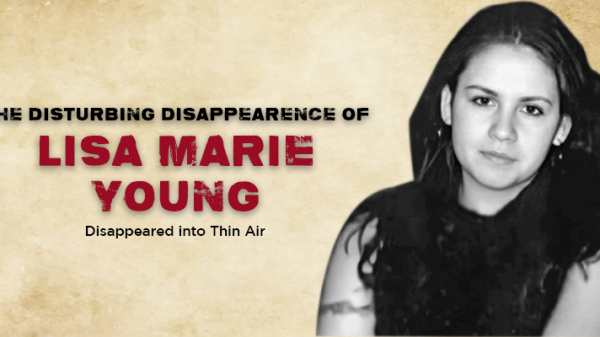
Lisa Marie Young’s disappearance is probably one of the most well-known cases on Vancouver Island, especially around Nanaimo, where people still speak about it as though the truth is sitting just below the surface.
In the early hours of June 30, 2002, twenty-one-year-old Lisa left a Nanaimo nightclub with a young man driving a burgundy Jaguar. She had been celebrating during the Canada Day weekend, spent time with friends, and later attended a house gathering. During those final hours, she remained in contact with people she knew.
Lisa reportedly indicated that she was being held against her will, or at least that she was unable to leave. By morning, she had disappeared.
The man associated with the Jaguar was identified as Christopher William Adair. He was interviewed, but no charge followed. Police later came to believe that Lisa’s disappearance involved foul play, and over time, the case became one of the most discussed unresolved investigations on the Island.
Lisa’s family, friends and members of the Tla-o-qui-aht First Nation searched for her, put up posters and repeatedly challenged the urgency and quality of the police response. Her mother, Joanne, spent years trying to find out what happened to her daughter. She died in 2017 without receiving an answer.
A mother spends fifteen years searching, listening to rumors, dealing with police, attending searches and hoping someone will finally speak, and then dies while the person responsible, assuming someone is responsible, continues living with whatever they know.
The case has not simply been ignored. Police have gathered large amounts of documentation and witness information, conducted repeated searches around Nanaimo and returned to locations based on both older and newer tips. Specialized methods, including ground-penetrating radar, have also been used. An anonymous donor later offered a substantial reward for information leading to the recovery of Lisa’s remains.
What makes Lisa’s case especially complicated is the enormous amount of local certainty surrounding it. While going through the research materials, I found comment after comment from people claiming that everyone in Nanaimo already knows what happened. They named private individuals, described houses and properties, talked about parties, drugs, organized sexual violence, police involvement and supposed burial locations. Some comments were written as if the entire case had already been solved everywhere except inside a courtroom.
There were no documents, photographs, original witness statements or clear explanations showing whether the commenter had actually been present in 2002. Most of the time, the source was another person who had supposedly heard the story from someone in the same social circle.
That does not mean every rumor is false.
Nanaimo is not a huge city, especially when people move within the same bars, parties, neighborhoods, and drug circles. Someone who grew up there, worked in nightlife or knew people involved in the local criminal world may genuinely have heard the same names repeated for years. It is possible that parts of those stories came from people who knew something firsthand.
But hearing the same story ten times does not mean ten different people witnessed it.
They may all have heard it from the same person. That story can then move through friends, relatives, bars and Facebook groups for twenty years until nobody remembers where it actually started. By then, repetition itself becomes the evidence.
People say, “Everyone knows.” But who is everyone?
Who personally saw Lisa after the house gathering? Who spoke with her? Who saw the Jaguar later that morning? Who knows where it traveled because they actually witnessed it, rather than because someone told them years afterward? Which rumors existed in 2002, and which ones only appeared after podcasts, Facebook pages and later searches brought the case back into public attention?
Those questions matter.
Lisa’s case also exists under the shadow of Robert Pickton. Families of missing women in British Columbia were ignored or dismissed for years, while rumors about Pickton’s farm circulated around the same communities. What sounded unbelievable eventually turned out to contain a horrifying amount of truth.
So I understand why people look at Lisa’s case and say the same thing could be happening again. Police were wrong before. Families were dismissed before. People who claimed to know something were not always taken seriously before.
But Pickton cannot be used to prove every later rumor. That history is a reason to investigate allegations carefully, not a reason to publish every allegation as fact. Past police failure does not automatically make an anonymous Facebook account correct.
This is especially important because living people are still being accused in connection with Lisa’s disappearance. Online, the story often moves very quickly. A person is linked to the Jaguar. Then they are linked to a house. The house is linked to a group. The group is linked to drugs, trafficking, or another missing person. Before long, every part of the theory appears to confirm the next part, even though the original connection may never have been proven.
Some of the people connected to the case have also reportedly left the country, which has only fueled further suspicion online. But leaving Canada is not evidence of murder. It may matter to investigators, depending on the timing and circumstances, but the public cannot treat it as a confession.
There is another problem with all of these rumors. After enough years, a witness may no longer know whether they remember an actual event or have simply heard the story repeatedly.
Someone may honestly believe they saw a particular person, vehicle or location in 2002. But if they have spent years reading the same names and theories online, memory can become contaminated. The original recollection and the later story start blending together.
That is why the basic questions are still more important than the larger theories.
Who saw Lisa after the gathering? What calls and messages came from her phone? Where did the Jaguar travel? Who had access to the locations police later searched? Which witness statements were given immediately, and which appeared years afterward? Can anyone repeating the local story identify the person who originally told them?
A murder investigation has to survive challenge. It needs evidence that can be tested, compared and presented in court. Community certainty does not have the same burden. It only needs enough people to repeat the same answer until it feels true.
None of this should be used to dismiss Lisa’s family or reduce the case to a lesson about internet rumors. Their criticism of the early investigation deserves attention. The delays, the lack of urgency they experienced and the continued absence of a prosecution are real parts of this story. Police themselves believe foul play occurred and have continued searching.
But I cannot take an anonymous accusation and turn it into a verdict because the official case remains unsolved. The most honest version is also the most frustrating. Lisa was last known to be with identifiable people. She sent messages suggesting she could not leave. Police believe something criminal happened. More than two decades later, the publicly available evidence has still not been enough to prove in court who caused her disappearance or where she was taken.
Someone knows more. The question is whether that person has already spoken and was not believed, or whether they have remained silent all this time.
Three years after Lisa disappeared, another Indigenous woman vanished from the Victoria area.
Belinda Ann Cameron, also known as Belinda Engen, was forty-two years old when she was last confirmed alive at a Shoppers Drug Mart on Esquimalt Road in May 2005. She was not reported missing until several weeks later.
By the time police began asking questions, memories had already started fading. Receipts, surveillance footage and routine observations may no longer have existed. People who had seen Belinda could have assumed the encounter was unimportant and forgotten it completely.
Belinda required daily medication and had experienced mental illness and substance addiction. Police information also described her as possibly involved in survival sex work. Those details made her more vulnerable, but they also created the danger that people would treat her disappearance as expected. That happens far too often.
When someone has unstable housing, addiction or mental-health problems, their absence does not always create an immediate alarm. Friends may believe they are staying with somebody else. Family members may already have irregular contact. Police may initially hear that the person has disappeared before or often moves around without explanation.
Days pass because nobody knows exactly when concern should become an emergency.
By the time everyone agrees that something is wrong, the trail is already old.
Belinda’s disappearance has been treated as suspicious, and her daughters have continued looking for answers. But the case has never received the same sustained attention as Michael Dunahee, Lisa Marie Young or Emma Fillipoff. Her name appears in missing-person lists, Indigenous women’s memorials and occasional police appeals, but there is very little public detail explaining her final movements.
That lack of information can make a case slowly disappear for a second time.
First the person vanishes, then the public record around them becomes smaller until there is almost nothing left beyond a photograph, a date and the word missing.
Belinda’s circumstances also show why cases involving people on the margins can become almost impossible before investigators even realize there is a case. Someone with a stable job, regular schedule and close family contact may be reported missing within hours. Someone moving between shelters, friends’ homes, temporary rooms or the street may not have one clear moment when their absence becomes unusual.
There may be no employer asking why they missed work. No landlord entering the apartment. No vehicle left behind. No phone being answered until it suddenly stops.
Belinda was vulnerable before she disappeared, but that does not explain what happened to her. Mental illness, addiction and survival sex work are risk factors, not conclusions. They should have made her disappearance more urgent, not easier to dismiss.
Her daughters are still left with the same basic question. Where did Belinda go after that pharmacy, and who saw her next?
The Disappearance of Emma Fillipoff and Sylvia Apps
Emma Fillipoff’s disappearance is one of those cases where the final confirmed moment feels almost impossible to accept, because she was not alone in the wilderness or driving somewhere nobody could see her. She was standing barefoot near the Fairmont Empress Hotel in downtown Victoria while police officers were speaking with her.
This happened on the evening of November 28, 2012. Emma was twenty-six years old, visibly distressed and behaving in a way that had concerned people around her. Police spoke with her, assessed the situation, and ultimately allowed her to leave. She walked away from that encounter and has never been conclusively seen again.
That police interaction has become the part everyone returns to because it feels like the last moment when something could have been done. The officers were physically there. Emma was clearly not doing well. Her mother was already traveling from Ottawa because she was worried about her. Looking back now, knowing that Emma disappeared immediately afterward, it is difficult not to ask why she was allowed to walk away.
But the officers did not know what we know now.
An adult can appear anxious, confused, or behave unusually without meeting the legal threshold required for police to detain them. Being distressed is not automatically enough. Police cannot simply take control of someone because they appear frightened or eccentric, especially when that person has not committed a crime and does not clearly state that they intend to hurt themselves.
That does not make what happened feel any better. It only explains why the moment was not as simple as it appears years later.
The hours before Emma disappeared have been examined repeatedly. She had been living an unstable and transient life in Victoria, staying at a women’s shelter and at times living in her vehicle. She had contacted her mother, and her behavior had become increasingly concerning. She reportedly abandoned or disposed of some of her possessions and moved between locations in a way that suggested she was either preparing to leave or experiencing a serious crisis.
There were also indications that she was afraid of someone.
That detail has become the center of several theories, but it is also one of the hardest things to interpret. Was Emma genuinely being followed or threatened? Did she believe someone was after her because of her psychological condition? Was there a real person involved whom police never identified? Or did fear cause her to move through the city in ways that later appeared more organized than they really were? I do not know.
Later accounts produced disputed sightings, stories involving a man in a distinctive green shirt, and claims that Emma may have been seen in other places. Some believe she died by suicide. Others think she left voluntarily and managed to remain hidden. Another theory is that she encountered a predator while vulnerable, or that someone she already knew became involved.
None of those theories has produced a confirmed trail beyond the night she disappeared.
Emma’s case reminds me of Ian Indridson’s disappearance for one obvious reason. Both were experiencing severe psychological distress, both left on foot from populated areas of Victoria, and both disappeared without a confirmed route afterward. But that does not mean the same thing happened to them.
Victoria may look like a dense urban area, but it contains more exits from ordinary visibility than people realize. There are shorelines, parks, ravines, wooded spaces, public transit routes, ferries and areas where someone can move without creating a permanent record. A person can leave downtown and reach the water quickly. They can also remain somewhere inside the city while nobody realizes who they are looking at.
The similarity between Emma and Ian may simply show how vulnerable someone becomes once they leave during a crisis without a phone, clear plan or reliable person following their movements. It does not prove that another person was waiting for them.
Emma’s case was eventually transferred to a historical case review unit, and police have continued releasing anniversary appeals and age-progressed images. Those images are difficult to look at because they show the face of someone who may have continued aging somewhere, even though the public record stopped when she was twenty-six.
The hope is that someone remembers something differently now. Relationships change. People who were afraid to speak may no longer feel the same loyalty or fear. A detail that seemed meaningless in 2012 may become important once it is placed beside information police already have.
But Emma’s face has circulated across Canada for years, and publicity has still not produced one verified movement after the Empress.
That is the part that stays with me. A woman was barefoot, distressed and speaking with police in the center of Victoria. She walked away, and despite cameras, traffic, pedestrians and years of national attention, nobody has been able to show where she went next.
Sylvia Apps Goes on a Hike
Two years after Emma disappeared, sixty-nine-year-old Sylvia Apps entered Strathcona Provincial Park for a solo multi-day hiking trip.
Sylvia was not inexperienced. She knew the outdoors and began her trip from the Paradise Meadows area in July 2014, traveling toward Castlecrag Mountain. When she failed to return, search teams were sent into an enormous alpine region filled with ridges, lakes, forests, snowfields and terrain that can become dangerous very quickly.
Her backpack was later found abandoned. Sylvia herself was not.
Her experience is one of the main reasons the case is sometimes described as especially mysterious. People assume that an experienced hiker would not become lost, make a poor decision, or leave important equipment behind. But experience does not make someone immune to injury, weather or one bad step.
An experienced person may actually travel farther alone because they trust their ability to handle the terrain. They may continue after conditions worsen because they have dealt with bad weather before. One fall, injury or moment of disorientation can place someone below a ridge, inside vegetation or in terrain that cannot be seen from the main route or from the air.
Strathcona Provincial Park is enormous. Searchers can work through the most likely routes and still miss a person who moved in an unexpected direction or fell into a place nobody could safely reach. Snow, water, animals, and seasonal vegetation can change the landscape after someone disappears.
The abandoned backpack is unsettling because it seems to suggest an event. Why would an experienced hiker leave it behind? Was she injured? Did she remove it temporarily? Did she become confused? Was it found where she left it, or had weather and terrain moved it?
There is not enough public information to answer those questions. Some people include Sylvia in the larger list of unexplained Vancouver Island disappearances because her body and remaining equipment were never found. But there is no public evidence that another person was involved. Her experience makes a simple mistake seem less likely to outsiders, but experienced hikers still suffer falls, exposure, medical emergencies and disorientation.
The wilderness does not care how prepared someone is.
Sylvia’s case is disturbing because the search did recover one important piece of her journey, yet that clue did not lead to her. Her backpack proved she had reached a particular part of the park, but somewhere beyond that point, the trail ended.
Just like Emma’s disappearance, there is one final location and then a blank. The difference is that Emma vanished from the center of Victoria while people moved around her, and Sylvia disappeared inside one of the largest wilderness areas on the Island.
Three men missing from Cowichan Tribes
Desmond Peter’s disappearance belongs near the center of this entire story, especially when people talk about missing men from the Cowichan Valley.
Desmond was only fourteen years old when he disappeared on March 12, 2007. He was a member of the Cowichan Tribes and was last seen near the former Malaspina College campus in Duncan, near the Trans-Canada Highway. Contemporary reports described him walking south, away from home and toward Victoria.
There were searches on land, from the air and around nearby waterways. A reward was offered. His family continued to put his name out publicly and asked people to remember anything they might have seen. Anniversary appeals brought the case back into the news from time to time, but none of it produced a confirmed vehicle, destination or person who could explain where Desmond went after that final sighting.
What bothers me is that Desmond was a child, yet his case is often grouped into the broader category of Vancouver Island’s missing men. That probably happens because the theory is less about a precise type of victim and more about Indigenous males disappearing around the Cowichan corridor. But at fourteen, Desmond’s age should have made the situation feel even more urgent.
At the same time, teenagers do not always tell their families everything. They may have friendships, arguments, plans or people they are meeting that adults know nothing about. Someone could believe Desmond was simply walking somewhere familiar while he had another destination in mind. He may have accepted a ride. He may have changed direction. He may have encountered someone near the highway.
The public information takes us to a fourteen-year-old boy walking south near Duncan, and then there is nothing reliable after it. No confirmed car. No identified offender. No verified arrival anywhere else.
Eight years later, another young man from Cowichan Tribes disappeared from the same broad area.
Ian Henry was twenty-six when he left his home near Tzouhalem Road on August 21, 2015. He did not return. His family and community members searched, put up signs, and continued asking for information long after the first wave of attention had faded.
People close to Ian described his disappearance as completely out of character. That phrase appears in almost every missing-person case, so I usually try not to treat it as proof of anything. Families do not always know every part of an adult’s life, and people can leave for reasons they never disclosed.
When the people who knew Ian believed something was immediately wrong, that should have been taken seriously. Instead, years passed without any public explanation of where he went, who may have seen him, or whether police established a reliable route after he left home.
Then, only six months after Ian disappeared, Everett Jones vanished from Duncan.
Everett was forty-seven years old and lived in the Club Road area. He had cognitive disabilities and was known to follow familiar walking routes through the community. His routines should, in theory, have made the search easier. People knew where he usually walked. His home was close to major stores, roads, and populated areas.
A surveillance image reportedly captured Everett around the time he disappeared.
That is what makes his case so unsettling. Everett was not known for randomly traveling long distances or disappearing into completely unfamiliar areas. He followed routines. He walked through places where people knew him. Yet after one ordinary movement through Duncan, the record stopped.
Desmond Peter, Ian Henry, and Everett Jones are discussed together for a clear reason. All three were Indigenous males connected to Cowichan Tribes. All disappeared within the same broad community. None has been found.
I do not know whether the disappearances are criminally connected. There is no publicly confirmed vehicle, suspect, location or method linking all three. Desmond was fourteen, Ian was twenty-six and Everett was forty-seven. Their daily lives and personal circumstances were different.
But their families did not need a serial killer to recognize that something was wrong.
The pattern they described was not necessarily one offender. It was the way missing Indigenous men seemed to receive less attention, how assumptions about addiction, wandering or personal problems could lower the urgency, and how the responsibility for keeping the cases visible repeatedly fell back onto the community.
You can draw dots around Duncan and ask whether one killer is operating there. It is much more difficult to show the gradual loss of attention after the first searches end. Families keep posting photographs. Community members organize walks and replace signs. Police say the file remains open. The years continue passing, but there is no visible movement.
An open case can sound reassuring. It does not necessarily mean detectives are actively receiving new evidence or searching new locations every week.
At some point, police reviewed these disappearances with what news reports described as “fresh eyes.” I understand why that phrase is used. A different investigator may notice something overlooked the first time. Old witness statements can be compared again. Records from separate cases can be checked against each other. Evidence may be tested using newer technology. Someone whose name seemed unimportant years earlier may now appear in another investigation.
But the phrase also raises an uncomfortable question. Why were fresh eyes needed?
Maybe the original investigators did everything reasonably possible and the evidence simply went nowhere. Missing-person cases can remain unsolved even after competent work. There may be no useful camera footage, no phone data, no witnesses and no physical evidence to test.
But a fresh review can also reveal that witnesses were missed, files were never properly compared, assumptions shaped the search too early or evidence sat for years without being re-examined.
Families hear that the investigation remains open. What they usually want to know is whether anything is actually happening.
Has someone been assigned to review the file? Were the cases compared properly? Did police re-interview people who were around Desmond, Ian or Everett before they vanished? Were old surveillance images enhanced? Were unidentified remains compared with family DNA? Did investigators look again at the roads, properties and social circles connecting the three men?
Or does “open” simply mean the file has never been officially closed?
That distinction matters, especially after nearly two decades in Desmond’s case.
It is possible these three disappearances have completely separate explanations. Desmond may have accepted a ride or travelled somewhere nobody expected. Ian may have encountered danger after leaving home. Everett may have wandered away from his normal route and entered terrain that was never searched properly. It is also possible that one or more involved someone else.
I do not have evidence that a single offender targeted them, and I do not want to force that conclusion simply because they came from the same community. But three Indigenous males disappearing from Cowichan Tribes, with no confirmed outcome in any of the cases, deserves more than the occasional anniversary story.
Desmond was fourteen. Ian was twenty-six. Everett followed familiar routes and should have been recognizable around Duncan. They were not strangers passing through the Island. They belonged to a community that noticed when they were gone.
Their families are still waiting for everyone else to notice too.
A Few Notable Disappearances on the Island in Recent Memory
Jordan Holling’s 2017 disappearance was one of the first cases that made me wonder whether something larger was happening on Vancouver Island. I have already written about his case in detail here, but the basic reason it remains so disturbing is simple: the distance involved was extremely short.
Jordan left a friend’s house in Campbell River and started walking home. He was later captured near Highway 19, moving through Campbellton, where lit streets, businesses, industrial properties, the river and patches of forest all sit close together. Search teams checked the water, roads and wooded areas nearby. His family distributed posters and made it clear that they did not believe he had simply chosen to disappear.
Nothing publicly released since then has explained what happened during that short walk. There has been no known bank activity, no reliable sighting after the highway footage, and no recovered possession that clearly shows where Jordan went next. Maybe he left the expected route. Maybe he entered the river area, accepted a ride, met someone he knew or suffered an accident somewhere searchers could not see. He may also have encountered someone dangerous.
The problem is not that there are no possible explanations. There are too many of them, and almost no evidence showing which one is correct.
People online often treat the highway sighting as proof that Jordan entered a vehicle. I understand why. A teenager disappears near a major road in the early morning, and the obvious thought is that someone stopped and picked him up. But the footage proves only that Jordan reached the highway area. It does not show him getting into a vehicle or speaking with anyone.
Even the way his final location is described can change how people imagine the case. Saying Jordan was “last seen on Highway 19” makes it sound like he was walking beside some remote highway surrounded by forest. That was not exactly the setting. He was in Campbellton, an inhabited and industrial section of Campbell River where the highway passes businesses, properties, side roads and the river.
That does not make the disappearance less strange. Honestly, it may make it worse.
There should have been more possible witnesses, more passing vehicles and perhaps more cameras. There were also more nearby hazards and more directions Jordan could have taken. A few words can completely change the mental image of where someone disappeared, which is why the exact location matters.
In October of the same year, another Vancouver Island man disappeared under completely different circumstances.
Brandon Cairney vanished from Port Alberni in 2017. He had a brain injury and was known to walk long distances. For almost five years, he remained another missing man whose name could be added to maps, timelines and theories about people disappearing across the Island.
Then, in September 2022, police found him alive in Burnaby. A man was identified through fingerprints as Brandon Cairney, but reportedly insisted that he was not Brandon and had been living under a different name. It sounds like something written for a mystery novel, but the most important part is that Brandon had survived. He had apparently lived for years beyond the reach of his family and the public missing-person record.
His recovery does not explain what happened to Jordan, Michael Gazetas, or anyone else. But it does show why being missing for years cannot automatically be treated as proof that someone is dead.
Adults sometimes leave. They may be dealing with mental illness, brain injury, estrangement, fear, shame or confusion about their own identity. Some may deliberately sever contact and create another life. Families can genuinely believe their loved one would never do that and still be wrong, because nobody knows every private part of another person’s mind.
That does not mean families should be dismissed whenever an adult disappears. Police cannot simply assume the person wanted to leave and stop looking. Brandon’s case should not be used as an excuse to tell every family that their relative probably chose a different life.
It should only remind us that uncertainty is real. Before Brandon was found, anyone confidently claiming that he had been killed by a Vancouver Island predator would have been wrong. Most people spreading that theory would probably not return to correct themselves. They would remove his name from the list, add another missing person, and continue with the same conclusion.
Then came Ben Kilmer’s disappearance in May 2018, which initially looked far more like a crime.
Ben was a forty-one-year-old electrician working in the Cowichan Valley. He failed to return from a service call, and his work van was found near Menzies Road with the engine still running. Ben was gone, and there was blood inside the vehicle. Everything about the scene suggested something had happened suddenly.
Ben had been in the middle of a workday. The van had not been parked and secured as though he intended to leave it there. The engine was still running, and the blood immediately raised the possibility that he had been attacked or badly injured before leaving the road.
Police, search-and-rescue teams and volunteers moved through the surrounding forest. His family asked for information, and for months there was no clear explanation of where Ben had gone after leaving the vehicle.
It looked criminal.
His remains were eventually found in a wooded area several kilometers from the van. The BC Coroners Service later concluded that Ben had died by suicide through asphyxiation. The blood inside the vehicle came from a separate injury and was not evidence that another person had attacked him.
That finding completely changed the story people had formed around the van.
What looked like the scene of an interrupted assault was actually the beginning of Ben’s final journey into the woods. The engine, the blood, and the abandoned work vehicle were all real clues, but they did not mean what most people initially believed.
Ben had reportedly received treatment for stress and anxiety, but the people closest to him did not know that he intended to die. The visible evidence pointed outward toward an attacker, while the real explanation lay in something happening privately in his own life.
I think Ben’s case is one of the most important in this entire article because it shows how quickly a disappearance can look like murder without actually being one. Had his body never been found, the running van and the blood would almost certainly still be used as evidence of a predator operating in the Cowichan Valley.
People would ask who forced him from the vehicle. They would connect the blood to a struggle. Someone would probably link the location to other cases and say the police were refusing to admit the obvious.
The official conclusion may have solved the question of how Ben died, but it did not make his final hours any less difficult for his family. The mystery was not who took him. It was what happened before he stepped away from that van and entered the forest alone.
Another case that remained unresolved for almost a year was Colin Court. Colin was seventy years old when he disappeared during a fishing trip at Cowichan Lake in November 2019. His truck and fishing equipment were found, but Colin was not. Search-and-rescue crews examined the lake and nearby shoreline, yet nothing was recovered during the original effort.
For almost a year, his name could have been placed beside every other person who seemed to vanish from Vancouver Island. Then, in November 2020, a specialized dive team recovered his body from the lake.
The answer had remained in the area searchers already believed was most likely. It simply took different equipment and another search to find him. That is important because Colin still appears on some older online lists of missing Vancouver Island residents, even though his case was resolved years ago.
This is how outdated lists create false patterns. Someone collects names in 2019, never updates the post, and years later another person uses it as evidence that the number of unexplained disappearances keeps growing. Colin becomes permanently missing online even after his family received an answer.
Angelina Brown’s case is different because I could not find enough reliable follow-up in the research material to confidently state her current status.
Angelina, an Indigenous woman from Victoria, was reported missing in August 2019 and described in public appeals as high risk. Her name appears on several Island lists and later mapping projects, usually among unresolved cases.
But I do not want to repeat that status simply because old posts continue to list her as missing.
The material I reviewed did not contain a strong enough current source showing whether she was found, whether the investigation changed, or whether she remains missing today. So Angelina belongs in the fact-check queue before this article is published.
That may sound overly cautious, but this is exactly how misinformation enters missing-person stories. A name appears on a poster. The poster is copied into a Facebook group. Someone puts the name on a map, and years later, nobody checks whether anything changed.
Jordan Holling remains missing. Brandon Cairney was found alive. Ben Kilmer was found dead, and the coroner determined that another person was not responsible. Colin Court was recovered from Cowichan Lake. Angelina Brown’s current status needs to be confirmed properly.
Placing all five names on the same list without those distinctions would make the Island appear more mysterious. It would also make the list wrong.
Disappearance of Kelly McLeod and Kolby Sinclair from Campbell River
Jordan Holling was not the last person to disappear from Campbell River while leaving almost nothing behind for the family to follow.
On October 3, 2019, fifty-one-year-old Kelly McLeod was last seen in the city. Kelly had struggled for years with addiction, petty crime, and periods of homelessness. At one point, he had even lived beneath a bridge. Those details appeared in almost every report about him because they helped explain why reconstructing his movements was so difficult.
Unfortunately, they also seemed to decide how much sympathy some people thought he deserved.
Kelly’s mother and sister did not speak about him as an addiction problem or a collection of police contacts. He was still their son and brother. Even when drugs controlled much of his life, he remained connected to the family in small ways. He usually returned for Christmas, and after he disappeared, that ordinary habit became something they waited for.
Christmas came, and Kelly did not. His family eventually came to believe he had been killed. Later reporting described the investigation as a homicide inquiry, although Kelly remained officially listed as missing and his body had not been recovered. That distinction matters because police may strongly believe someone is dead without having the physical evidence needed to explain exactly what happened or charge the person responsible.
Kelly’s case also shows why the phrase “high-risk lifestyle” bothers me.
I understand why police use it. It can tell investigators where to look. Drug dealers, encampments, temporary rooms, hospitals, jails, shelters and people connected to the local street scene may all become important. Someone living without a stable address or routine is obviously harder to trace than someone who reports to the same workplace every morning.
But the phrase can also make people treat the disappearance as an expected outcome.
Kelly had addiction problems, so strangers assume something bad was always going to happen. He had been involved in petty crime, so his death becomes less shocking. He had experienced homelessness, so people think disappearing is somehow part of that life.
It is not. A person can be involved in crime and still become the victim of a crime. A drug debt, robbery, argument, witnessed offense or dispute with another person can produce violence without any connection to a serial killer. Someone may know exactly what happened to Kelly and still refuse to speak because telling the truth would expose their own involvement in drugs or another offense.
That is the problem with saying “the street knows.”
The street is not one person keeping a complete record. People lie to protect themselves. They exaggerate their connections, repeat threats as though they were confirmed events and disappear from contact for reasons that have nothing to do with the case. Ten people may repeat the same story, but none of them may have witnessed anything themselves.
If Kelly was killed, police still need something that can be used as evidence. A witness willing to testify. A confession. Phone records. A physical location. Remains. Something connecting a person to the act rather than simply showing they knew Kelly or used drugs around the same people. Without a body, even a strong suspicion remains difficult to prove.
Then, in March 2025, another Campbell River man disappeared. Kolby Sinclair was thirty years old when he was reported missing after he stopped keeping in contact with his family. Investigators believed he had last been seen on March 8. By May, the Vancouver Island Integrated Major Crime Unit had taken over the case, and police executed search warrants at two properties.
That is a major escalation. Police do not normally bring in a major-crime unit and search multiple properties because an adult forgot to call home. It suggests investigators found something in Kolby’s final movements, communications or associations that required more specialized attention.
But the police did not publicly explain the entire theory.
That silence immediately created another round of speculation. People assumed the properties being searched belonged to killers. Others decided police had found evidence of a body. Some connected Kolby to Jordan Holling and Kelly McLeod because all three had disappeared from Campbell River.
A search warrant does not prove the people inside a property committed murder. It means police presented enough information for a judge to authorize a particular search. Investigators may have been looking for a phone, clothing, a vehicle, digital evidence or something connected to the timeline. The public does not know, and major-crime involvement does not give us permission to invent the missing details.
Still, I understand why Kolby’s disappearance brought the serial-killer theory back again. Campbell River already had Jordan Holling, a seventeen-year-old who vanished while walking home in 2017. Then Kelly McLeod disappeared in 2019, with his family believing he had been killed. Now Kolby was missing, and major-crime investigators were searching properties.
Placed together, the cases look extremely suspicious.
Jordan was a teenager walking through Campbellton in the early morning. Kelly was fifty-one and connected to the local drug scene. Kolby was thirty, and whatever police learned led them toward specific properties. The disappearances occurred across eight years, and there is no public evidence showing that any of the men knew the same person, entered the same vehicle, or visited the same location.
The geography connects them. That is all we can currently prove. That does not mean police should ignore the possibility of a connection. Of course they should compare the cases. The same names, phone numbers, vehicles, properties, or associates may appear in more than one investigation. If three people vanish from the same city without remains, it would be strange not to check.
But comparing files is not the same as linking them.
Campbell River is also a regional center for a huge surrounding area. It has Highway 19, industrial properties, riverbanks, forest access, logging roads and people moving through for work, drugs, temporary housing and outdoor activity. The same community can produce unrelated crimes, accidents, and disappearances.
I keep coming back to that uncomfortable middle ground. There may be something connecting one or more of these men. Kolby’s investigation, especially the involvement of the major-crime unit and the property searches, gives the public a legitimate reason to ask what police discovered. Kelly’s family has long believed he was killed. Jordan remains missing after a walk that should have taken only minutes.
But three disturbing cases in the same city are not automatically one case.
Campbell River may be hiding one larger story, or it may be carrying three completely different ones. Right now, the public evidence is not enough to tell us which.
The Disturbing Disappearance of Michael Gazetas
Michael Gazetas’s disappearance is one of the strangest cases in this entire article because he did not simply walk away and vanish. His truck disappeared with him.
On the morning of January 31, 2020, fifty-one-year-old Michael left his home near Courtenay in a red 2011 Ford Ranger. He was familiar with the backcountry and was known to drive into remote areas, so investigators believed he may have been heading toward Gold River. A reported sighting placed the truck traveling west, and large sections of extremely difficult terrain were searched afterward.
A person disappearing in the wilderness is already difficult to understand, but an entire Ford Ranger should be much easier to find. It is a large red vehicle, not a backpack or a jacket hidden beneath vegetation. That is what has always bothered me about this case. Even if Michael left the truck somewhere and continued on foot, the vehicle itself should still provide investigators with a starting point.
But then again, British Columbia has repeatedly proven that vehicles can disappear almost as completely as people. A truck can leave a logging road and fall down an embankment without leaving anything obvious from above. It can enter a lake, river or flooded quarry. It can become trapped beneath trees, snow and vegetation, especially in an area where roads are rarely traveled. Search aircraft are good at identifying bright colors, reflections and straight mechanical shapes, but forest canopy and deep shadow can hide all of those things.
The truck may still be somewhere between Courtenay and Gold River, only a short distance from a road people have traveled hundreds of times.
Michael’s family and the police have continued asking for information. In 2026, six years after he disappeared, Comox Valley RCMP issued another public appeal. The same details remained at the centre of the case: Michael, the Gold River area and the red Ford Ranger.
That renewed appeal also shows how little has changed. After six years, the truck still has not been located, and investigators still appear to be working from the belief that Michael traveled west. Maybe he reached a road or trail that was never properly searched. Maybe the truck entered deep water or went over an embankment where it cannot be seen. Maybe someone else moved it. Or maybe the entire assumption about where he was heading is wrong.
I do not know which explanation is worse.
If the truck is somewhere in the wilderness, it means years of searches may have passed within a few kilometers of it. If another person moved the vehicle, then this becomes something much darker. And if Michael never traveled toward Gold River at all, investigators may have spent years searching in the wrong direction because one sighting or one piece of information was mistaken.
Then there is the service truck. In online discussions about Michael’s disappearance, people repeatedly mentioned a service vehicle traveling along the same stretch of road around the same time. This detail has stayed with the case because there are so few other people in the story. Michael drives west in his red Ranger, a service truck is reportedly somewhere nearby, and then Michael disappears.
I understand why people find that suspicious. I did too when I first came across it.
But a service vehicle using the road is not evidence that its driver ever saw Michael, stopped for him or had anything to do with his disappearance. Logging roads and routes toward Gold River are used by utility workers, forestry crews, contractors, mechanics and other people whose jobs take them into remote places. The vehicle may have passed Michael’s truck without anything unusual happening.
Still, it should have been checked, and perhaps it was. What frustrates me is that there is almost no public follow-up explaining whether police identified the driver, reviewed the route, or ruled out any connection. The service truck appears in discussions, attracts suspicion and then simply disappears from the public story.
No follow-up, nothing.
Michael is often connected to Jordan Holling because both disappeared from the central or northern part of Vancouver Island and both cases involve roads connected to Highway 19. But beyond that, the circumstances are completely different. Jordan was seventeen and walking through Campbell River. Michael was fifty-one, driving a truck into the backcountry. The disappearances happened more than two years apart.
Could the same person somehow be involved in both cases? Anything is possible when there is so little evidence. But there is currently nothing public showing that Michael and Jordan met the same person, travelled through the same exact location or were targeted for the same reason.
Someone may eventually find it below a road, inside deep water or hidden in an area that looked perfectly ordinary from the air. Until then, Michael’s case remains one of the most difficult to explain because two large things disappeared that morning: a man and the vehicle carrying him.
The morning Ian Indridson left Victoria
Ian Indridson’s case is strange for a completely different reason. He did not disappear somewhere deep in the mountains or along an isolated logging road. He walked out of his home in Victoria during the morning, in an area where people were already awake, commuting, exercising and walking their dogs.
Ian disappeared on January 10, 2022, shortly after his fifty-fourth birthday. At the time, he was experiencing severe anxiety and had not been sleeping properly. He left his Fairfield-area home sometime between approximately 7:15 and 7:50 in the morning, wearing dark clothing, rubber boots and glasses.
He left his phone, wallet, keys and jacket behind.
That immediately made people believe he intended to return. Why would someone leave without money, identification, a phone or proper clothing unless they were only going outside for a few minutes? It is a reasonable question, but Ian was also in the middle of a serious mental-health crisis. Someone suffering from extreme anxiety and sleep deprivation may not make decisions according to a normal plan. Leaving essential belongings behind could mean he expected to return, or it could simply mean he was not thinking clearly enough to take them.
Either way, he walked out into an ordinary Victoria morning and was never conclusively seen again.
That is what makes this case so hard to understand. Fairfield, Gonzales and Oak Bay are not empty places. People walk along the streets early in the morning. They take children to school, drive to work, run near the waterfront and walk dogs through the neighborhood. Ian may have passed dozens of people.
The problem is that nobody knew they were supposed to remember him.
A middle-aged man wearing dark clothing and rubber boots would not appear unusual on a wet January morning in Victoria. Someone may have seen him crossing a road, standing near a bus stop or walking toward the ocean and never thought about it again. By the time his disappearance became public, those small observations may already have blended into every other person they saw that morning.
His family repeatedly asked walkers, runners and residents to think back. Did anyone see a man fitting Ian’s description? Did he speak to someone? Did he appear confused, frightened or unusually dressed for the weather? Even a direction of travel could have changed the search.
Police considered Ian high risk and suggested that he may have headed toward the ocean. Because he lived relatively close to the shoreline, the water became one of the main theories. But that is still only a theory. No body has been recovered, and no confirmed evidence has shown that Ian entered the ocean.
This is where missing-person cases become so frustrating. A likely explanation begins to sound like a confirmed one simply because it is repeated for years. Ian was in distress, he lived near the ocean and he disappeared, so people naturally assume he reached the water. That may be exactly what happened. But nobody has proved it.
Ian’s state of mind also causes his case to be treated differently from disappearances where foul play is suspected immediately. The moment people learn that someone was suffering from anxiety or sleep deprivation, they often feel the mystery has already been solved. The person must have died by suicide, wandered into danger or deliberately disappeared.
But a mental-health crisis explains why Ian left the house. It does not explain what happened afterward.
He could have entered the water. He could have hidden somewhere. He could have accepted a ride, spoken with a stranger or entered a building where nobody connected him to the missing-person report. A distressed person can still become the victim of a crime. They can also survive for some time while avoiding contact, especially if fear or confusion prevents them from asking for help.
Ian had worked in public service and was described by his family as intelligent, articulate and sociable. I think that is important because missing-person coverage often reduces people to whatever condition existed when they vanished. Ian becomes “the man suffering from anxiety,” as though everything else about him stopped mattering.
His family described someone who could speak comfortably with strangers. That means there may be a person somewhere who had a brief conversation with Ian that morning and never realized its importance. Maybe he asked for directions. Maybe he mentioned where he was going. Maybe someone gave him a ride because he appeared cold or distressed.
To that person, it may have seemed completely ordinary.
Years later, there is still no confirmed route beyond Ian’s neighbourhood. His belongings remained at home. There has been no publicly identified bank activity, phone movement or reliable sighting establishing that he left Victoria. There is also no evidence that he deliberately started another life somewhere else.
Ian’s case has sometimes been included in the larger discussion about missing men on Vancouver Island, but the known facts point first toward a person leaving during a serious crisis. That does not make the case less mysterious. Honestly, I think it makes it worse.
A man walks out of his house in one of the busiest cities on the Island during the morning. He has no phone, no wallet, no keys and not even the jacket he would normally need in January. People are moving everywhere around him. There are houses, traffic, buses, businesses and cameras.
And then he is gone.
In Michael Gazetas’s case, the wilderness may be hiding both him and his truck. In Ian Indridson’s case, the strange part is that a city full of people could not preserve one reliable movement after he left his front door.
Both cases end the same way, but they reach that blank from completely different directions.
Laura Huebner and the photograph from the boat
Laura Huebner’s case is one of the stranger ones I came across because there are so few confirmed details, yet the little we do know points in several different directions.
Laura arrived at Victoria International Airport on April 24, 2022, after traveling from Saskatchewan. Airport surveillance confirmed that she got off the flight. She was supposed to return home on April 28, but she never boarded the plane, and by April 29, she had been reported missing. Somewhere between arriving near Sidney and missing that return flight, police came to believe Laura had traveled north to the Nanaimo area.
Even the basic details became confusing almost immediately. Some early reports said Laura was forty-seven, while others identified her as forty-five. The stronger contemporary reporting appears to support forty-five. She was around five feet eight inches tall, with blond hair and brown eyes, and was believed to be wearing jeans, a white jacket, and a white hoodie.
Laura had recently lost her mother and had been working several demanding jobs. Friends also spoke about how much the COVID period had disrupted her life, but they described her as energetic, motivated and passionate about costume work. She apparently had a film job coming up and was expected to return for it, which is one of the reasons people close to her did not believe she had simply decided to disappear.
Of course, people can make plans and still leave. They can book flights they never intend to take and talk about future work while hiding what is really going on. But Laura had a return ticket, people expecting her back, and a job she appeared excited about. That does not prove she met with violence, but it makes the idea of a carefully planned permanent disappearance feel less convincing than something happening during the trip.
However, there is a photograph that makes things way more unsettling. Laura sent her father a photo showing part of a sailboat, along with water and what appears to be nearby shoreline. Friends understood that she had traveled to meet a man she knew online and that he had invited her onto a boat. Not long afterward, people online noticed a sailboat they believed resembled the one in the image near an RCMP vessel or being escorted into dock.
But the RCMP never publicly confirmed that the boat was connected to Laura.
That did not stop the internet from building almost the entire case around it. Commenters identified a man they believed was associated with the vessel, looked through his criminal history, searched his social media accounts, examined past interactions with Laura, compared boat registration records, and began treating him as if he had already been charged. People even discussed his appearance, weight and whether he still looked like older photographs.
Then other users noticed a major problem. The registered owner of the boat apparently had a different name from the man being discussed. Some argued that he may have used the vessel without legally owning it. Others questioned whether the photographed boat and the one examined by police were even the same boat.
So which part of this is actually confirmed?
Police almost certainly knew much more than the public. They would have had access to airport footage, Laura’s phone records, messages, travel arrangements and whatever information connected her to Nanaimo. If they examined a boat, they would also know who owned it, who used it and whether there was anything inside linking it to Laura. The public did not have that information, yet people online were already conducting a trial based on Facebook likes and boat photographs.
The fact that nobody was charged does not mean the person discussed online was cleared. It also does not mean police secretly know he killed her but cannot prove it. Canadian police generally do not release the names of private individuals just because Reddit has decided they are suspicious.
The photograph itself has also been forced to mean almost everything.
Some people believe Laura took it because she was scared and wanted her father to know where she was. Others think it was just a casual vacation photo. Some say she was trying to preserve location metadata. Others argue it proves she boarded the boat, while another group says the angle suggests she may only have been standing near it. There are even people who believe someone else used her phone to send the image after something had already happened.
One photograph cannot prove all of that.
At most, it may show that Laura, or someone using her phone, was near a particular sailboat. Without verified metadata, the image does not tell us exactly where it was taken, who took it, whether the boat was moving, whether Laura boarded it or what happened afterward. It is an important clue, but it has been stretched far beyond what the public can actually prove.
The transportation question bothers me more because it is much harder to explain away.
Victoria International Airport is near Sidney, more than one hundred kilometres by road from Nanaimo. Laura apparently did not rent a vehicle. Public reporting never identified a bus driver, taxi, friend or random traveller who brought her north. Intercity transportation on Vancouver Island was already limited in 2022, and ride-hailing was not operating the way it later would.
So how did she get to Nanaimo?
The most obvious answer is that the person she intended to meet picked her up. That would make sense, especially if the visit had already been arranged online. But unless police have confirmed it privately, it is still an assumption. We do not know whether someone met her at the airport, whether she used a bus, arranged a private ride or travelled some other way.
That missing journey between Sidney and Nanaimo may be one of the most important parts of the case, yet there is almost nothing publicly available about it.
There was also a brief moment when people thought Laura had been found. A body was recovered near Protection Island, and because of the location and timing, some assumed it must be her. It was later identified as a man who had entered the water during an unrelated incident.
By then, however, the first assumption had already spread.
For a short period, people believed the case was over. The body had been found, Laura was dead and there was no need to keep looking. When the correction came out, it did not receive the same attention. That happens constantly with missing-person cases. The first dramatic update travels everywhere, while the later correction quietly disappears into an edited article or a police notice most people never see.
And Laura remained missing.
When a missing-person case becomes a homicide investigation
Amber Manthorne’s disappearance is one of the few cases where the police eventually confirmed what people had already suspected for a long time. Amber was forty years old when she disappeared from Port Alberni in July 2022. Her family and friends stopped hearing from her, and her white Jeep Compass was later found abandoned near a logging road outside Nanaimo. Once the Vancouver Island Integrated Major Crime Unit became involved, it was difficult to believe police were treating this as someone who had simply left for a few days.
Still, almost nothing was said publicly for more than two years. People knew Amber was missing, knew the Jeep had been found in a remote area and knew major-crime investigators had taken over, but nobody outside the investigation seemed to know what evidence they were following. There were no remains, no arrest and very little explanation for why the case had escalated so quickly.
Then, in October 2024, police finally said they believed Amber’s disappearance involved foul play and that she was unlikely to be alive. They also identified her former boyfriend, Justin Hall, as a person of interest. By then, Hall was already dead, meaning investigators could no longer question him, challenge his version of events or bring a case against him if they eventually gathered enough evidence.
Police released more of the timeline involving Amber’s Jeep and asked the public to help locate several items, including a large tote or storage bin. The way investigators described it suggested that the item could help them locate Amber’s remains. Until then, most of the darker discussion around the case had come from people online looking at the abandoned Jeep and assuming the worst. Now the police themselves were saying Amber had probably been killed.
That is what separates her disappearance from many of the other cases in this article. People often see an abandoned vehicle near a logging road and immediately decide that a murder occurred. Sometimes they may be right, but a vehicle by itself does not tell us what happened. Cars and trucks are left behind after accidents, suicides, breakdowns, thefts and voluntary disappearances. In Amber’s case, however, investigators clearly believed the Jeep was part of the crime and that its movements could help reconstruct what happened to her.
Someone drove that Jeep after Amber disappeared. Someone left it near the logging road. Police were able to piece together at least some of its movements, but whatever they found was not enough to recover Amber or lay charges before the person they were interested in died. That is the part that bothers me. The investigation seems to have reached a point where police believed they knew the general shape of what happened, but they were still missing the evidence that could finish the case.
Amber’s disappearance also makes it harder for me to completely dismiss what people say about Vancouver Island’s remote roads. We repeatedly see missing people connected to logging routes, abandoned vehicles, forests and places where someone can leave a main road and disappear from ordinary view within minutes. Most of those cases will not turn out to be connected, and an isolated road does not automatically mean foul play. Amber’s case proves, however, that these places really can be used to move a vehicle, conceal evidence and hide what happened to someone.
It does not mean whoever harmed Amber was also responsible for Jordan Holling, Michael Gazetas, Nicholas Marion or anyone else. There is no evidence establishing that. But it does mean the criminal explanation cannot always be dismissed as internet paranoia from people watching too many true-crime documentaries. In at least this case, the abandoned vehicle near a logging road really did appear to belong to a crime.
What remains strange is how long it took before the public was told any of this. Maybe police had good reasons for withholding the information. Releasing too much could have damaged the investigation, alerted a suspect or influenced witnesses. But from the outside, Amber simply disappeared, her Jeep was found, and the case sat there for more than two years with almost no explanation.
Police eventually admitted what direction the evidence had taken them. Amber had likely been killed, and the man they wanted answers from was already dead. Her remains are still missing. Whatever police know, it has not yet been enough to bring her home.
Melissa McDevitt and the ground already searched
On December 10, 2022, thirty-eight-year-old Melissa McDevitt was captured on camera near the Sooke Potholes area before beginning a hike. Her vehicle was found, and a major search followed. Teams used dogs, helicopters, and thousands of volunteer and professional hours across the Sea to Sea Regional Park and surrounding terrain. The official search was eventually suspended without finding her.
Almost a year later, volunteer searchers located Melissa’s remains in dense vegetation within the broader area. Police said criminality was not suspected. The recovery was devastating, but it resolved one question that had encouraged speculation: Melissa had not necessarily been transported far away simply because intensive searches had failed.
Her case should be kept beside every confident claim that “they searched everywhere.” Search teams are skilled, organized, and often extraordinarily persistent; however, they are not omniscient. Terrain has depth, not merely surface area. Vegetation changes with the seasons, snow alters contrast, water levels rise and fall, and a person wearing natural colors can blend into the ground. Search probability declines sharply when the initial route or behavioral assumption is wrong.
Melissa’s recovery does not explain Sylvia Apps, Michael Gazetas, or any other missing person. It gives those cases a realistic environmental context. The same island that allows a person to be hidden by another human being can also hide someone without human assistance.
Nicholas Marion and the investigation outside the investigation
Nicholas Marion is one of those cases that looks ordinary for about five seconds, and then the more you sit with it, the less sense it makes.
At around 6:30 in the morning on June 30, 2024, Nicholas left a residence on Youbou Road and told his wife he was going for a walk. He was thirty-eight years old. The two of them had travelled to the Cowichan Valley for the long weekend and a music event, and Nicholas was not familiar with Youbou. For some reason, he left his phone behind. Then he stepped outside and never came back.
There was no dramatic final phone call, no known argument in the middle of the road, no CCTV footage showing him getting into a suspicious vehicle. He went for a walk in the morning and disappeared.
The Lake Cowichan RCMP later released the usual description. Nicholas was six feet tall, around 174 pounds, with black hair, brown eyes and a short black beard. Search-and-rescue teams, police, volunteers and private groups searched the roads, forests, shoreline and steep terrain around Youbou and Cowichan Lake. This was not some quick look around the neighborhood before everyone gave up. People spent days and weeks searching, and some volunteers remained involved long after the official attention had started to fade.
Then a black H&M shirt was found.
Police later confirmed that the shirt belonged to Nicholas, indicating that something of his had been found away from the residence. It was a real clue, probably the strongest physical clue made public in the entire case. But again, it led nowhere. Why was the shirt there? Did he remove it because he was hot? Did it get caught on something? Did he leave it behind intentionally? Was he injured? Was he running from someone? Or was the shirt simply found along the route he had taken before continuing much farther?
Youbou is also not a normal place to disappear from, at least not in the way people unfamiliar with Vancouver Island might imagine. It is not a major city with endless roads, trains, taxis and crowds to disappear into. The community runs along Cowichan Lake, with houses and local roads squeezed between the water, forest and rising terrain. Old logging roads and bush routes stretch away from the populated areas, and some of them can take you into difficult country very quickly. A person can still be close to homes and technically close to civilization while also being surrounded by enough forest to vanish completely.
That is the usual explanation people give for cases like this. He walked into the woods, got lost, became injured, and was never found. And yes, that is possible. Vancouver Island is full of terrain that can hide a person, a vehicle, or even an entire crash site much longer than people expect. But Nicholas was not hiking deep into the backcountry with camping equipment. He supposedly went out for a morning walk. How far did he really travel? Which direction did he take? Why leave the phone behind when he was unfamiliar with the area? And if he became injured somewhere nearby, why has such an extensive search failed to locate him?
There is also the lake. There are passing vehicles. There are logging roads. There are people living in isolated areas. There are several directions this could have gone, and the shirt does not tell us which one.
What makes Nicholas’s disappearance even more complicated is that the search did not remain only about Nicholas. It turned into a second online investigation, with strangers, volunteers, relatives, podcasters, and people close to the case arguing over what happened, who had spoken to police, whose DNA had been submitted, what Nicholas was wearing, and whether certain people were cooperating enough.
I came across one Reddit exchange that honestly shows how ugly these cases can become when no one has answers.
A volunteer said he had spent around three weeks searching the bush outside Youbou for Nicholas. He claimed that the amount of online harassment directed at Nicholas’s wife was vile and that people were using speculation and circumstantial details to accuse her of things they could not prove. Someone identifying themselves as a member of Nicholas’s family then responded furiously, accusing the volunteer of interfering, spreading misinformation and treating the case like entertainment. They argued over whether statements had been given to police, whether the volunteer had any real connection to the investigation and whether ordinary actions were being twisted into evidence of murder.
The volunteer accused others of treating things like moving into a cheaper apartment or refusing to communicate with hostile relatives as evidence of guilt. The family member accused him of having a strange obsession with the case and claimed that actual relatives were still searching, while outsiders were creating confusion. Both sides presented themselves as the ones trying to protect Nicholas, and both accused the other of making the situation worse.
I have no way of knowing who was right in that argument. Reddit is not a police file, and people can say anything when they are angry, grieving, or convinced that someone else is hiding something. But the exchange is important because it shows what happens when a person disappears, and the investigation produces almost nothing publicly.
A wife moves to a cheaper apartment, and suddenly people are asking why. Someone does not speak to a relative, and that becomes proof of guilt. A volunteer keeps searching, and one group sees dedication while another sees obsession. A family keeps demanding answers, and some people call it advocacy while others think they have already decided who to blame.
This is where things can get dangerous, because the online drama does not stay separate from the real investigation. People can, and will, repeat rumors as facts. Volunteers start searching locations because someone on Facebook had a feeling. Witnesses may decide not to come forward because they do not want their names dragged through a public argument. Someone involved in the case might release private information just to defend themselves. Before long, people are no longer only trying to find Nicholas. They are also trying to prove that their version of the story is correct.
Podcasts have kept the case in the public eye, which is a good thing. Without independent journalists, family members and private researchers, many missing-person cases disappear from the news after the first few days. Nicholas’s shirt, the timeline, the searches and the arguments surrounding the case have all received more attention because people refused to let the story die.
But podcasts also turn information into a narrative. They need chapters, contradictions, suspicious moments and people whose actions can be examined. That does not mean the reporting is dishonest. It means that real life is often much messier. Sometimes there is no clean revelation. Sometimes two people give completely different versions of the same event, and there is not enough public information to determine which one is true.
The facts in Nicholas’s disappearance are still incredibly limited. He left a residence on Youbou Road at around 6:30 in the morning. He said he was going for a walk. He did not know the area well. He left his phone behind. His shirt was later found during the search, and everything after that is uncertain.
Did Nicholas walk into the forest and become injured somewhere searchers missed? Did he reach Cowichan Lake? Did he accept a ride from someone? Did he deliberately leave his phone because he did not want to be tracked? Did something happen during the walk that caused him to remove the shirt? Was he trying to leave, or did he expect to return in half an hour?
And then there is the question everyone seems to avoid because it opens the door to all the darker possibilities. Did Nicholas actually disappear while walking, or did something happen before he ever got very far?
I do not know. Nobody outside the investigation knows. The public arguments do not prove that his wife harmed him, and they do not prove that the family’s concerns are meaningless. The shirt does not prove an accident, nor does it prove foul play. Even the phone left behind can be interpreted several ways depending on which theory someone already believes.
That is what makes this case so frustrating. Nicholas did not disappear while climbing a mountain or exploring some remote trail nobody knew he had taken. He walked away from a residence in a small lakeside community early in the morning. There were roads, houses, passing vehicles, forest, and water all around him.
Somewhere between that front door and wherever he went next, the trail ended. And despite the searches, the arguments, the podcasts, the accusations, and the thousands of people who now know his name, Nicholas Marion is still missing.
Other names in the Island ledger
While going through all of this research, I ended up with dozens of names. The problem is, not all of them belong in the same category, and some of them probably should not even be listed together at all. A few are major unresolved Vancouver Island cases. Some were solved years after the original Facebook posts or Reddit threads were written. Others disappeared somewhere else entirely, but somehow ended up copied into Vancouver Island lists anyway. Then there are names that appear on random graphics or old posts with no police file number, no proper article, and sometimes not even a confirmed spelling.
That matters because I do not want this article to become another page that throws fifty names together and calls it proof of a pattern. That said, some cases are clearly central to this story. Michael Gazetas, Jordan Holling, Ian Indridson, Nicholas Marion, Emma Fillipoff, Lindsey Nicholls, Lisa Marie Young, Belinda Cameron, Sylvia Apps, Laura Huebner and Granger Taylor all remain unresolved based on my research for this draft. Michael Dunahee is still missing as well, but his case is a child-abduction investigation and does not really belong inside the same modern cluster of missing men. Jennifer Hillier-Penney and Thomas Guy Jones are often included in copied lists, but neither disappeared on Vancouver Island. Colin Court, Ben Kilmer, Melissa McDevitt and Brandon Cairney were eventually resolved in completely different ways, and honestly, I think they should still remain in the article because they show how wrong these lists can become when nobody updates them.
Amber Manthorne is another case that needs to be separated from the others. She was first reported as a missing woman from Port Alberni, and for a long time the public knew very little beyond the fact that her Jeep had been found abandoned. Later, police stated that they believed she had been killed and identified a person of interest. At that point, it was no longer just an unexplained disappearance. It became a homicide investigation, and if I keep it in the final article, it deserves its own properly sourced section rather than being buried in a giant list.
There are also cases where the first headline made everything look similar, but the outcome was completely different. Gerald Kearney disappeared during the Fairy Creek protest period and remains missing. Bear Henry was also feared missing during the protests, but later walked out alive. Easha Rayel and James Evans disappeared with their vehicle and were later found in a ravine near the ferry route. For a while, they were simply another missing couple with no apparent trace. Then it turned out that the car had gone off the road and remained hidden by the terrain. That is exactly why the first few days of a case cannot be treated as the final story.
The research bundle also includes names like Dwayne Rideout, Nathan Trevor Coleman, Desmond Peter, James McGrath, Andrew Sexton, Daniel Joseph Pickett, Kelly McLeod, Kolby or Colby Sinclair, Stewart Taylor, Christopher Roberts, John Fowlow, Troy Blais and Tanya Johnson. Some of these may be genuine Vancouver Island missing-person cases. Others may have spelling mistakes, outdated information, or no reliable source attached at all. I do not want to discard them, because that could mean overlooking someone whose case genuinely deserves attention. But I also cannot write full sections about people when the only source is a copied Facebook list with no date and no RCMP link.
There is always a temptation to include every name possible because it makes the article look massive and definitive. Fifty missing people sounds more alarming than twenty carefully researched cases. But that is also how bad information becomes permanent. If Morbid Kuriosity is going to be the first place people visit when they search for Vancouver Island disappearances, it cannot become another dumping ground for unverified names. I would rather have a smaller list that is correct than a dramatic one built from errors.
So, until I get more conclusive evidence, every uncertain case needs to be checked against RCMP releases, Canada’s Missing, coroners’ information, archived news reports and contemporary local coverage. Some names will stay. Some will move into a separate index. Some may have to be removed entirely. That is not me trying to make the story less mysterious. It is the only way to make sure the mystery we are discussing is actually real.
Counting the missing without manufacturing a pattern
One thing I kept seeing again and again while going through these Reddit threads and Facebook posts was people saying Vancouver Island has an “absurd” number of missing people. But what number are we actually talking about here? People reported missing in one year? People who were still missing after a week? Cold cases going back fifty years? Unidentified remains? Or every missing-person post someone remembers seeing on Facebook? Those are not the same thing, and mixing them together is how the numbers start to look much worse than they actually are.
British Columbia really does have a high rate of missing-adult reports compared with the rest of Canada. That part is not made up. But a missing-person report does not automatically mean someone vanished forever, was murdered, or became the victim of some serial killer. As research has shown us, the same person can be reported missing more than once. Someone can disappear for a few hours, be found safe later that day and still be counted in the yearly total. So when people say BC has the most missing people, I keep wondering how many of those reports were resolved almost immediately and how many involve the same vulnerable people being reported repeatedly.
Then there is the geographical problem. Some statistics are for the entire province of British Columbia. Others are for the Vancouver Island and Coast economic region, which includes places that are not actually on Vancouver Island. But then someone takes those provincial numbers, compares them with a hand-made list of Island cases, and suddenly the two are being used as proof of the same thing. They are not measuring the same area, the same population or even the same type of case.
If we really wanted to know whether Vancouver Island has an unusually high number of unresolved disappearances, we would need to define exactly what we are counting. Pick a period. Count unique people, not repeated reports. Separate the people who were found from the ones still missing. Separate children from adults. Separate someone who deliberately left from someone police believe met with foul play. Then compare that number with similar places in Canada that also have forests, coastal roads, seasonal workers, tourism, homelessness, ferries, and people constantly moving in and out.
The Island also has its own population quirks. With such a vast and diverse geography, there are older residents, tourists, hikers, surfers, seasonal employees, people living in vehicles, people moving between communities, and people who arrive from elsewhere and then disappear. Laura Huebner, for example, was not from the Island. She traveled here and then vanished. If someone is trying to calculate a rate based only on permanent residents, where does a case like hers fit? These details make the number much harder to calculate than simply counting names on a map.
I found one comment on Facebook that tried to show the increase in disappearances by listing names across different decades. At first glance, it looked convincing. Recent decades have had far more names, which makes it seem like something has suddenly become much worse. But the list included people from Newfoundland, Prince George and Vancouver. Some cases had already been resolved. So the apparent increase was partly due to placing people in the wrong location and failing to update what happened to them.
There is another obvious reason newer decades produce longer lists. A disappearance from 2024 can generate police releases, Facebook groups, Reddit discussions, podcasts, TikTok videos, news reports, and hundreds of reposted posters. A case from 1974 may have appeared once in a local newspaper and then disappeared into an archive nobody has digitized. Of course the modern list looks larger. We can find more of it.
That does not mean fewer people went missing in the past. It means fewer of their stories are searchable now.
The families also make a major difference. A missing person with relatives who speak to reporters, create posters, run a Facebook page and contact podcasters will be much easier to find during research. Someone who was estranged from their family, living on the street or surrounded by people who do not trust police might leave almost no online record. Some Indigenous communities may still remember cases locally that never received serious outside coverage. So a list made from Google searches is not only measuring disappearances. It is measuring which families had the ability, time, and support to keep someone’s name visible.
Social media has also completely changed how often we see missing-person cases. Years ago, a bulletin might appear in one local newspaper or on a poster near a grocery store. Now the same poster can be shared into twenty community groups before lunch. It stays online for years, even after the person is found, because most people never return to update the original post. Sometimes, even some news media are notorious for doing this. Residents can therefore feel like they are seeing more disappearances because the same cases are circulating more widely and for much longer.
I am not saying Vancouver Island has a normal number of missing people. I do not know that. That is the whole point. The material people usually offer as proof does not actually answer the question.
A proper comparison would have to look at unresolved cases per capita across similar Canadian regions, not just count every missing-person appeal. It would need to compare coastal and wilderness areas, track what happened in each case, and account for repeat reports. Only then could we start asking whether the Island is genuinely different or whether its geography, population and internet visibility make it look different.
The Highway 19 theory has the same problem. People keep pointing to clusters around Victoria, Duncan, Nanaimo, Courtenay and Campbell River, but those are also places where most people on the Island live. Of course, more cases appear around the major population corridor. A raw map will always create clusters around cities and highways because that is where the population is concentrated. To prove Highway 19 is unusually dangerous, someone would have to compare the number of disappearances there with the number of people living and traveling along it.
Maybe that comparison would reveal something. I am not dismissing it, but right now, a group of dots near the highway is not enough.
What I can say is that British Columbia receives a high number of missing-adult reports and Vancouver Island has several unresolved cases that deserve far more attention than they receive. What I cannot honestly say is that those numbers prove one person is responsible. There is a huge gap between “there are many missing-person reports” and “a serial killer is operating on Vancouver Island.”
The Reality Behind Missing People of Vancouver Island
Unresolved cases are always the ones people remember because there is no ending. The person disappears, the search slows down, the news moves on, and years later the same photograph is still being shared with the same question underneath it. But while going through these cases, I realized that the ones eventually solved are just as important, because many of them looked completely impossible in the beginning too.
Take Harold Backer, for example. He was a Victoria investment adviser, a former Olympic rower, and he disappeared in 2015. There were searches, missing-person appeals, and plenty of reasons for people to assume something terrible had happened. Then, in 2017, he simply walked into a police station. Later criminal proceedings involving money he had taken from investors gave the disappearance an explanation nobody had publicly known when he first vanished. If the case had remained unsolved, people could have spent years blaming the ocean, the forest, an accident, or some unknown person. The actual answer was that he left deliberately.
Brandon Cairney’s case is even stranger. After years of being missing, police identified a man as Brandon through his fingerprints. You would think that would be the end of it, but the man reportedly denied that he was Brandon Cairney at all. He had been found alive, but the situation was far from normal. There were still questions about his identity, his mental state, his contact with family, and why he refused to accept the name the fingerprints connected him to. Still, whatever happened during those missing years, it was not murder.
Then there is Bear Henry, who disappeared during the Fairy Creek protests in 2021. At the time, there were people camping in remote logging areas, police confrontations, arrests, roads blocked off, and a lot of confusion. When Henry disappeared, people naturally wondered whether they had been injured, arrested somewhere, attacked, or lost in the forest. Months later, Henry came out alive. Gerald Kearney disappeared during the same general protest period and, based on the material I found, remained missing. Two people connected to the same environment, the same remote logging country and the same chaotic period, but completely different outcomes.
Easha Rayel and James Evans are another example of how a case can lead everyone in the wrong direction. There were supposed sightings placing them away from Vancouver Island, which made it appear that they had continued travelling and gone somewhere else. Their vehicle was eventually found down an embankment near the road leading to the Swartz Bay ferry terminal. They had been close to one of the Island’s busiest transportation routes the entire time, but the car was hidden well enough that passing drivers could not see it.
That case really bothers me because it shows how easily witness sightings can move a search away from the correct place. People see a photograph online, then later see someone who looks similar and honestly believe they have found the missing person. Most are not lying. They are trying to help. But one confident sighting can send police, family and volunteers searching an entirely different town while the person is still close to where they disappeared.
Colin Court’s truck and fishing equipment were found near Cowichan Lake, but the first searches did not locate him. His body was finally recovered from the lake almost a year later. Melissa McDevitt was found in thick vegetation after searchers had already spent thousands of hours looking for her. So when people say someone “vanished without a trace,” sometimes that only means the trace has not been found yet. A body can be underwater, behind vegetation, below a road, or only a short distance outside the area everyone thought had already been searched properly.
Ben Kilmer’s case is another one that originally looked like foul play. His work van was found running, there was blood inside it, and Ben was gone. Those details were real. Nobody online invented them. But the blood did not mean someone had attacked him, and the running van was not evidence of a staged crime scene. The coroner later determined that Ben died by suicide and that the blood came from a separate injury. Without that final discovery, I have no doubt his name would still be included in lists claiming that someone was attacking men across the Cowichan Valley.
And then there are all the people who are found safely without the update ever travelling as far as the original missing poster.
A police department may post that someone is missing, and the image gets shared hundreds or thousands of times on Meta. Later, police update the original notice to say the person has been located. But by then, screenshots are already everywhere. The Facebook post may be deleted for privacy reasons, while older copies keep circulating on other pages. Months or even years later, someone sees the same poster and adds that person’s name to another list without checking whether the case was resolved.
This is probably one reason Vancouver Island seems to have so many people who simply disappear forever. We remember the original appeal, but not the update.
National missing-person statistics show that most reports are resolved fairly quickly. That does not make the remaining cases less serious, especially for families who have spent years waiting for an answer. But it does mean we cannot take every missing-person bulletin we have ever seen and count it as an unresolved disappearance. Some people are found within hours. Some vulnerable individuals are repeatedly reported missing. Some leave voluntarily. Others are located deceased. Those are completely different outcomes, but on social media they often get lumped together as the same number.
This is why any proper Vancouver Island missing-person database would have to be updated constantly. Each case should show when the information was last checked and where the current status came from. Someone should not remain labeled “missing” forever just because an old Facebook graphic was never changed. A person may be found alive, recovered from the wilderness, identified through old remains, confirmed as a homicide victim, or discovered to have left on their own. The case has to change when the evidence changes.
Resolved cases also stop theories from becoming permanent. If Melissa McDevitt had never been found, people might still be adding her to maps of supposed predator victims. If Colin Court had remained in Cowichan Lake, his truck and fishing equipment could have become part of some theory involving a suspicious vehicle or stranger. If Brandon Cairney had never encountered police, his photograph might still be shared as proof that someone was taking men between Port Alberni and Campbell River.
I am not saying every unresolved case will eventually have an ordinary explanation, because they don’t. Some of these people may have been murdered. Some may have encountered someone dangerous. But the cases that have already been solved show how many different things can sit behind the same first headline.
On Vancouver Island, people have disappeared because they chose to leave, because they died by suicide, because their vehicle went off the road, because they drowned, because they became lost in the wilderness, and because they survived somewhere without contacting their family. Any larger theory has to account for all of that before deciding that one person is responsible.
Did a serial killer move along Highway 19?
The serial-killer theory usually starts with a map. Highway 19 runs north from the Nanaimo area through the Comox Valley, Campbell River and toward the northern Island. Once you start placing missing-person cases along that route, it does look strange. Jordan Holling was last seen near Highway 19 in Campbell River. Michael Gazetas left the Courtenay area and was believed to be driving toward Gold River, using roads connected to the same highway system. Add a few more names from Nanaimo, Parksville, Courtenay and Campbell River, and suddenly there is a line running up the eastern side of Vancouver Island.
I can understand why people look at that and think one person might be moving along the corridor.
But Highway 19 is also the main road connecting most of the Island. A huge portion of the population lives near it, works near it or has to use it to travel between communities. If someone disappears from Vancouver Island, especially anywhere between Nanaimo and Campbell River, there is a good chance the highway will appear somewhere in the story. Car crashes, ambulance calls, stores, workplaces and missing-person cases all cluster along Highway 19 because that is where the people are.
So the highway alone does not prove the fact that there is an opportunistic serial killer.
For the connection to become more convincing, the cases would need to share more than geography. Were the men contacted by the same person? Did they visit the same bar, website, workplace or property? Were they traveling at similar times? Did the same vehicle appear around more than one disappearance? Were their phones communicating with the same number? Did they all accept rides, hitchhike or meet someone shortly before vanishing? That is the kind of information that could turn a group of dots on a map into something more serious.
The problem is that most of these men have never been found. Without a body, there is usually no confirmed cause of death, no repeated injury, no DNA, no shared crime scene, and no clear method connecting one case to another. We do not even know for certain that all of them are dead. Some may have died accidentally. Some may have entered the water or wilderness. Some may have disappeared intentionally. And yes, one or more may have encountered someone dangerous.
But right now, the physical evidence needed to prove a serial pattern is mostly absent.
The supposed demographic connection also becomes weaker once you look at the individual cases instead of calling them all “missing men.” The ages range from teenagers to men in their forties, fifties, and older. Some disappeared while walking. Some were driving. Some were visiting places they did not know. Others lived in the area. Some had known mental-health concerns, while others apparently had no obvious reason to leave. A few were involved in outdoor activities, and others disappeared during ordinary routines.
The category exists because they are men who disappeared from Vancouver Island and remain missing. But if that is the only thing connecting them, it may be too broad to tell us much. You could probably build a similar category around missing women, missing hikers, missing drivers or people last seen near water. The question is whether there is something more specific underneath it that has not been made public.
One claim that came up repeatedly in the Facebook and Reddit threads was that the RCMP had already admitted a serial killer was operating along Highway 19. Some commenters stated this as if it were common knowledge. Others immediately asked them to provide a source, and nobody seemed able to produce the actual statement.
I could not find an official RCMP release confirming it either.
That does not mean police have never compared the cases. I would be surprised if they had not. When several people disappear from the same general region, investigators would naturally compare names, vehicles, phone records, locations and known associates. They do not need to publicly announce a serial killer before checking whether files overlap. That is normal police work.
But comparing cases is not the same as linking them. The claim that police have already confirmed a Highway 19 killer appears to have grown through repetition. Someone hears that investigators are looking at connections. Another person listens to the Gone Boys podcast (an excellent resource, by the way). Someone else reads a comment saying police “know more than they are saying.” Eventually, the idea becomes that the RCMP officially admitted there is a serial killer, even though nobody can locate the announcement.
Still, I understand why people are suspicious of police reassurance in British Columbia. Robert Pickton was able to target vulnerable women for years while families complained that their disappearances were not being taken seriously. The Highway of Tears includes cases affected by racism, distance, jurisdictional problems and the fact that many people had little choice but to hitchhike. Indigenous families have repeatedly described being ignored, dismissed or forced to conduct their own searches. Indigenous men and boys also experience severe violence, yet their disappearances receive far less sustained national attention than many people realize.
So when police say there is no evidence of a connection, some families hear something very different. They hear the same kind of reassurance that came before earlier failures were exposed. That distrust definitely did not appear out of nowhere.
But British Columbia’s history does not automatically prove that every group of disappearances is the work of another serial killer. What it proves is that police and journalists should not wait for a perfect pattern to emerge before taking individual cases seriously. By the time several victims are conclusively linked through forensic evidence, people may already have been missing for years.
But there is another problem with calling this a serial killer before there is any actual evidence. Once people decide a killer is involved, everyone around the missing person starts looking suspicious. The partner, the friend, the relative they argued with, or some guy seen driving a strange truck near a logging road. People start sharing names, searching random properties, following rumors into the bush, and accusing complete strangers because one detail seemed odd. We have already seen how ugly that can become in Nicholas Marion’s case. It does not help the family, and it can bury the real investigation beneath hundreds of useless tips and online accusations.
So where does that leave the serial-killer theory?
Honestly, I do not think it can be completely dismissed. Vancouver Island has remote roads, dense forest, isolated properties, ports, ferries and stretches of highway where people still hitchhike. Someone familiar with the Island could move between communities, approach vulnerable people and hide evidence in places that may never be searched properly. Amber Manthorne’s case already shows that a person can be killed and concealed using the same logging roads and remote areas people keep mentioning in these discussions.
But that does not mean Amber’s killer was responsible for Jordan Holling, Michael Gazetas, Ian Indridson, Nicholas Marion or anyone else.
There may be one offender connected to one or two cases. There may be several unrelated criminals operating over different decades. Or there may be no serial offender at all, only a collection of accidents, suicides, voluntary disappearances and individual crimes that look connected because they occurred on the same Island.
I keep coming back to the same problem. The theory is possible, but the public evidence is not strong enough to attach all these names to it.
That is not me trying to make Vancouver Island sound safer than it is. I live here. Working in the recreational industry, I know how quickly the towns give way to forest, logging roads and places where nobody would hear anything. I have also read enough of these cases to know that several contain details that do not sit comfortably with the usual explanation of someone simply getting lost.
Maybe the RCMP has information connecting some of these cases and is keeping it private. Maybe investigators compared them years ago and found nothing. Maybe the important connection is not Highway 19 itself, but a person, vehicle, property or social circle that has never been publicly identified.
Until something like that appears, the map remains disturbing, but it is still only a map.
Drugs, gangs, trafficking and the island beneath the postcard
The serial-killer theory is not the only one people keep bringing up. Across the Reddit threads, news articles, and Facebook comments, I found people talking about drug debts, biker enforcement, robbery, trafficking, sexual exploitation, boats, remote properties and people being killed because they knew too much. Vancouver Island obviously has organized crime, drug distribution and violent people. Nanaimo, Victoria and the smaller towns are not magically separated from everything happening across British Columbia just because tourists come here for the beaches and forests.
The ports, ferries and highways move almost everything through the Island. People, money, legal products, illegal drugs, vehicles, and probably a lot more that never appears in the news. So when residents talk about an underground economy operating behind the normal Island life, I do not think that part is difficult to believe. You can live here for years and still have no idea what is happening in another social circle five minutes away.
But did any of those groups actually have something to do with Jordan Holling, Michael Gazetas, Ian Indridson, Nicholas Marion, or the other people in this article? That is where the evidence disappears.
Some of the comments I found on social media were extremely specific. You will have to bear with me, as I go through those, relevant or not. One person claimed that teenagers were offered money to bring vulnerable classmates to parties, and that some of those classmates never came back. Another described a relative allegedly bragging about using an ATV to move bodies into areas where only animals would find them. Other commenters talked about hidden rooms, trafficking networks, police officers attending parties, known burial locations and even an annual gathering of traffickers operating across parts of the Island.
These are not small accusations. Some comments also identified specific people or families (usually, a trio based around Duncan, with Iranian ancestry), and claimed they were involved in disappearances, murder, trafficking or police corruption. I am not going to repeat those names as if a few Reddit accounts have solved the case. Sometimes it was simply one anonymous person saying that everyone in the area already knew the truth.
That does not automatically mean every story is false. People involved in criminal environments are not exactly going to submit a signed statement with their address attached before describing something dangerous. Some witnesses may be scared. Others may not trust the police, especially if they genuinely believe police officers are connected to the people they are accusing. Shame, addiction, criminal involvement, or fear of retaliation could easily keep someone anonymous.
But I also cannot take a disturbing comment and turn it into fact just because the person sounds confident and appears to know the area.
That is what makes these threads so difficult to use. A local person might know something important that has never been reported publicly. They might also be repeating the same rumor everyone else heard fifteen years ago. Several people knowing the same story does not necessarily mean several people witnessed it. They may all have heard it from one person, who heard it from someone else, and by the time it reaches Reddit or Meta, it sounds like an open secret.
What is easier to prove is that some people on the Island are much easier to exploit and much harder to track once they disappear. Someone living in a trailer, a tent, a forest camp, or temporary housing may not have an employer or landlord who notices immediately. A person struggling with addiction may move between communities, stay with different people and avoid police even before they go missing. Seasonal workers and people traveling for short-term jobs can disappear without leaving the same paper trail as someone with a fixed home and daily routine.
Transportation is another problem. Vancouver Island is large, but public transit between many communities is terrible or nonexistent. People hitchhike because sometimes there is no practical alternative. Someone without a vehicle who needs to travel between Courtenay, Campbell River, Port Alberni, Duncan, or a smaller community may end up accepting a ride from a complete stranger. Let’s be honest: how many times do we see these kinds of posts in our local groups asking if someone is going to an x location? Most of the time, nothing happens. But it only takes one dangerous person.
None of this requires one massive trafficking network operating across the entire Island. Different people can commit unrelated crimes using the same weaknesses. A drug dealer can kill someone over money. An abusive partner can drive into the forest. A stranger can pick up a hitchhiker. Someone can overdose at a remote property, and the people around them may hide what happened because they are afraid of police or criminal charges.
That is something I think gets lost in the argument. People talk as if there are only two choices. Either there is a serial killer, or all these people simply wandered into the woods and died accidentally. It does not work that way.
A missing person can be murdered without being part of a series. Someone can die during a drug deal, at a party, or inside an abusive relationship. A body can be moved because the people present panicked. A person can disappear after getting into the wrong vehicle without the offender having done it before or ever doing it again. The absence of a serial killer does not mean nothing criminal happened.
Vancouver Island also has this strange split personality that probably feeds a lot of the rumors. Visitors see marinas, forests, surf towns, expensive houses, retirement communities and beautiful little coastal roads. Residents also see homelessness, toxic drugs, poverty, abandoned industrial areas, biker connections, isolated properties and people who seem to know much more than they are willing to say publicly.
I have noticed it myself since moving here. The Island can feel peaceful and completely cut off from the worst parts of the world, and then you hear a story from someone who grew up here and realize there is another version of the place operating underneath it. That darker version feels more authentic because it sounds like local knowledge, the kind of thing tourists and newcomers would never see.
But sounding local does not make a story true.
Someone can be completely correct that organized crime, trafficking, and violent people exist on Vancouver Island, and still be completely wrong about what happened to one missing person. That is the part I keep coming back to. The criminal world described in these comments is generally believable. The connection between that world and the specific disappearances is where belief starts replacing evidence.
The rumor machine
One of the more useful threads I found asked people which Vancouver Island rumors they had heard before those rumors were later confirmed. It sounds like a good question, especially for a place where so much local information seems to travel through Facebook comments, bars, workplaces and people who “know someone.” But the thread almost immediately showed why this kind of thing becomes such a mess.
Some people gave genuine examples. Others started talking about volcanoes, secret film locations, satanic cults, organ harvesting and trafficking conventions. Several of those claims were challenged in the same comment section, sometimes with perfectly reasonable explanations, but that did not really stop them from continuing. Once a story becomes part of Island folklore, correcting it seems much harder than spreading it in the first place.
Cameron Lake was probably the best example.
People described it as bottomless, volcanic, and somehow connected to the ocean through underground waterways. One person said the real depth had never been found, while another mentioned caves and water systems running beneath the area. It sounded impressive until other commenters started asking for actual sources and found normal-depth measurements, local monster stories, and very little to support the grander claims.
That entire exchange reminded me of the missing-person discussions. Someone repeats a dramatic local story as if it is common knowledge. Another person asks where the information came from. Then the request for evidence is treated almost like an insult, as if questioning the story means you do not understand how things really work on Vancouver Island.
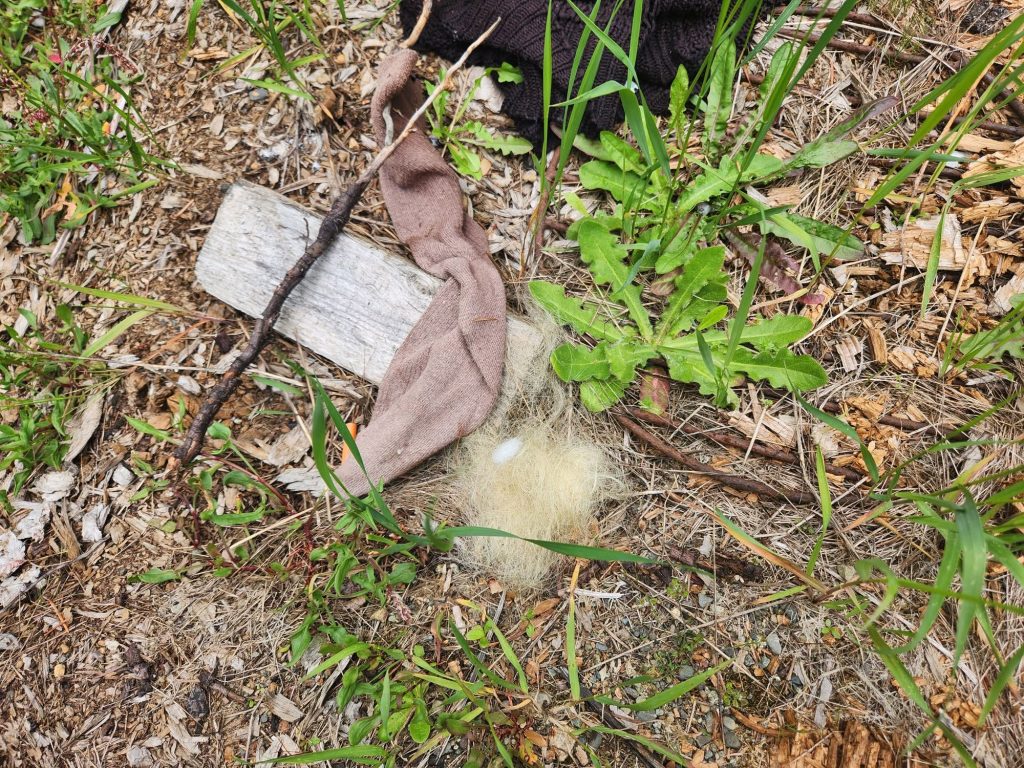
Clothing next to the remains that were found near Fish Hatchery, Qualicum River. Photo Credits: Sarah Brown
The same thing happens with Victoria’s reputation as some kind of satanic capital. That idea partly came from Michelle Remembers and the larger satanic panic of the 1980s. The book described prolonged rituals, abuse and murders, but many of its claims were later heavily challenged. Timelines did not match school attendance. Records did not support the alleged deaths. Some of the events described would have been almost impossible to hide.
And yet, decades later, Satanism still appears in discussions whenever somebody disappears around Victoria.
An old panic becomes a convenient explanation for a new case. No evidence is required, as the story already exists. People have heard Victoria is “satanic,” so a missing person is fitted into that idea whether the case has anything to do with it or not.
Social media makes this much worse because everything appears at the same level; an echo chamber, as it is often mentioned. A police release, a family statement, an anonymous accusation, a psychic reading, a podcast summary, and a sarcastic joke can all appear one after another in the same thread. Visually, they do not look very different. Most people are not opening every link, checking the date or asking whether the person commenting has any real connection to the case.
Someone who says they have lived on the Island for fifty years, knows local bikers and comes from a family with “deep roots” can sound far more convincing than an investigator saying there is not enough evidence to draw a conclusion. The investigator sounds uncertain because they are being careful. The anonymous commenter sounds certain because there is no consequence for being wrong.
The possible bone photographs in the research material are another good example. Someone posted images from a remote area and suggested they might be human remains. Naturally, people started reacting as if hidden victims had finally been found. The photographs already looked disturbing enough for anyone familiar with the missing-person stories to make that connection.
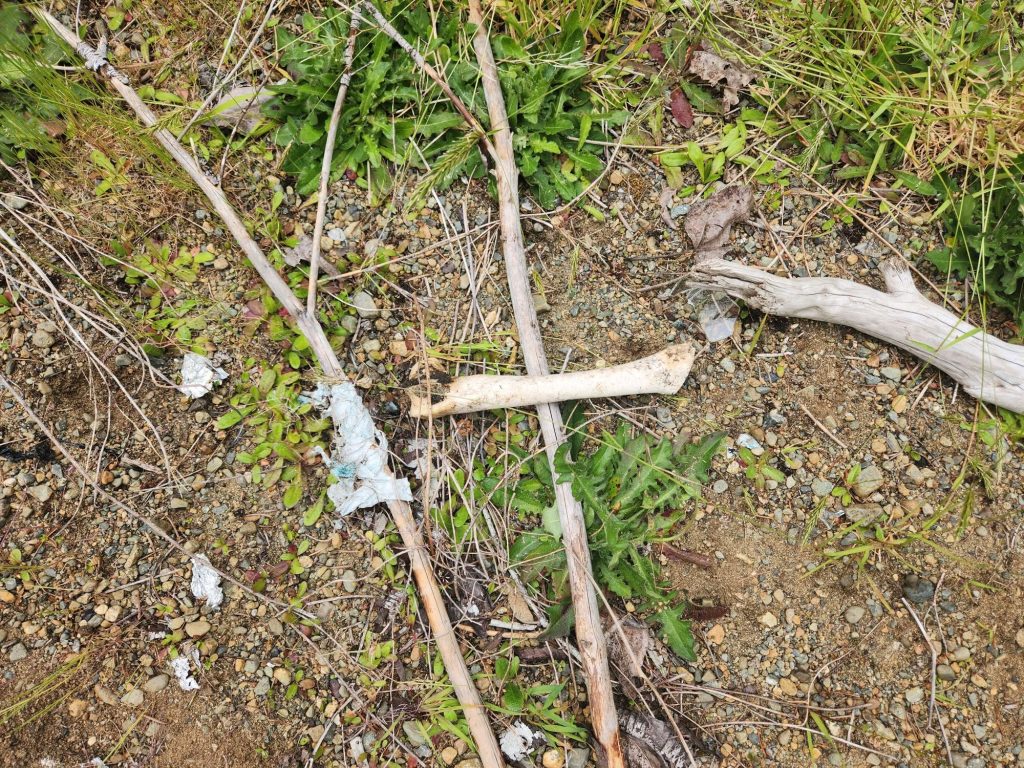
Remains found on the site near the fish hatchery; picture credits: Sarah Brown, Facebook
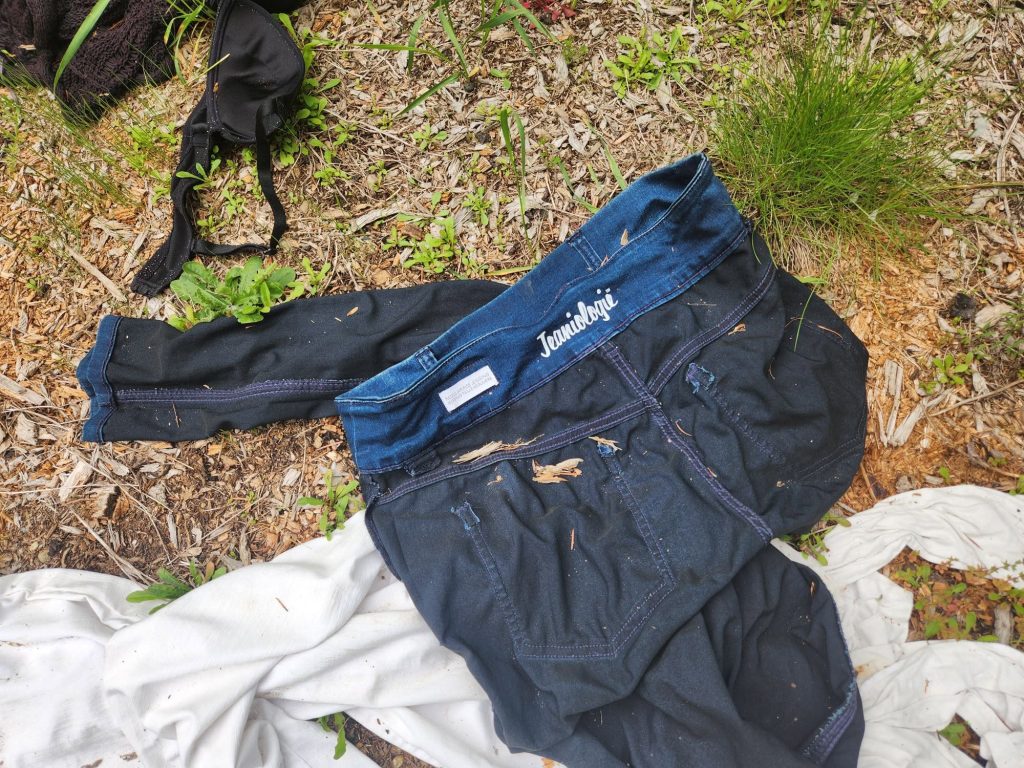
Human clothing next to the remains that were found near Hatchery, Qualicum River. Photo Credits: Sarah Brown
Then someone with supposed archaeological expertise examined the images and said the visible bones were not human. Rumors also have a way of protecting themselves from being disproven.
If police cannot verify a claim, people say police corruption explains the missing evidence. If no witness comes forward, fear explains the silence. If a person is never charged, then they must be an informant being protected. If investigators say there is no connection, that is treated as proof that they are covering it up.
I am not saying police deserve automatic trust. British Columbia has more than enough documented failures to justify asking questions. Families have dealt with delayed investigations, poor communication, missing evidence, and leads that were not properly followed. Those things should be criticized. But “the police know” is not enough.
What do they supposedly know? When did they learn it? Who told them? What did they do afterward? Was there a report, a search, an interview, or anything that can actually be traced? Without those details, the claim becomes impossible to separate from every other rumor in the thread.
The people who suffer most from all of this are the families.
One commenter on this photo was alarmed by how the image seems to show blond human hair. Could this be one of the missing people of Vancouver Island? Photo Credits: Sarah Brown, Facebook
Partners are accused of not reacting the way strangers expected. Parents are blamed for waiting too long before reporting someone missing. Searchers become suspicious because they appear too involved. Relatives are criticized for not being visible enough online. Basically, whatever someone does can be made to look guilty once the public has already decided there must be a hidden story.
That is what happened around Nicholas Marion’s disappearance. A volunteer saw himself as someone helping with the search. Family members saw him as interfering. Nicholas’s wife was accused because people believed ordinary decisions were suspicious. Everyone claimed they were trying to help, but the missing person gradually became only one part of a much larger public argument.
There are no rules in that kind of trial. Nobody has to prove what they are saying. Nobody has to correct a false accusation later. There is no cross-examination, no complete evidence file, and no obligation to distinguish between something heard from a neighbor and something confirmed by police.
Someone disappears, and before long, the internet starts deciding who caused it.
What the cases do and do not share
Jordan Holling leaves a friend’s house and is last seen near the highway. Michael Gazetas drives away in his red truck. Ian Indridson leaves home while struggling badly with anxiety. Laura Huebner arrives at Victoria International Airport and is believed to have travelled north toward Nanaimo. Nicholas Marion steps outside for what was supposed to be a morning walk. In every case, there is one final ordinary action, and then almost nothing.
There is no dramatic crime scene in most of these cases. No body, confirmed attack, or final phone call where somebody sounds frightened. The person is simply seen doing something normal, driving, walking, leaving a house, arriving at an airport, and then the trail disappears. It is difficult not to look at several cases like that and wonder whether the same thing is happening again and again.
But Vancouver Island also makes different disappearances look more similar than they may really be.
The towns here sit very close to places where someone can disappear quickly. A residential road can turn into forest as fast as a drive can lead into logging country. Lakes, shoreline, steep ground, and industrial areas are often only minutes away from houses and businesses. Public transit between communities is limited, so people accept rides, hitchhike, or drive long distances on roads that quickly become isolated. That means the blank at the end of each case could hide completely different outcomes.
Jordan may have accepted a ride. Michael may have left the road somewhere nobody has located. Ian may have gone somewhere while in distress. Laura may have met the person she traveled to see. Nicholas may have entered the forest, reached the lake, accepted a ride, or done something nobody around him expected. The fact that none of them was found does not automatically mean the same person took all of them.
There is also no confirmed physical pattern connecting the cases, such as a shared vehicle, a phone number appearing in several investigations, a Common bar, property, workplace, or social circle. No repeated injury because, in most of these cases, there are no remains to examine. The ages are different, the circumstances are different, and even the way each person disappeared is different.
For one person to be responsible for all of these cases, that offender would have needed access to a very wide range of people in completely different situations. A seventeen-year-old walking home. A middle-aged man driving toward the backcountry. A government employee leaving home during an anxiety crisis. A woman traveling to meet someone online. A visitor walking through Youbou early in the morning.
Could one offender target different people in different ways? Of course. Serial offenders do not always follow a perfect pattern. But we cannot assume that happened here simply because the victims were never found.
At the same time, some people leave deliberately. Some die by suicide. Some have accidents in terrain that is extremely difficult to search. Some are killed by partners, acquaintances, drug dealers, criminals or strangers. Some may be connected, while others probably are not. The Island does not need one hidden organization or one serial killer to produce a disturbing number of unresolved cases.
I know that answer feels unsatisfying. A serial killer gives the whole thing one shape. There is one offender, one secret, and one explanation waiting to be uncovered. The alternative is much harder to deal with. It means one person may have entered the water, another may have driven off a logging road, another may have been murdered by someone they knew, and another may have walked away while nobody understood how badly they were struggling.
Working chronological of Vancouver Island Missing People
While going through all of these cases, I realized I needed to put together some kind of proper register, not just because there are so many names, but because the status of these people keeps getting mixed up online. So this list is mainly here for editorial review and search purposes. It is not supposed to replace the full stories above, and I will need to check every status again before publishing because, as I have already learned, missing-person information changes and old posts rarely update themselves.
1980: Granger Taylor, Duncan area
Granger Taylor left his family home on November 29, 1980, after writing that he was leaving on an interstellar journey. He was thirty-two years old, obsessed with machinery and UFOs, and had even built a full-sized flying saucer in his parents’ yard. Then he drove away in his truck during a severe storm, and neither he nor the vehicle was ever seen again.
Later theories connected debris near Mount Prevost to an explosion, with some believing Granger may have died there. But no publicly conclusive identification ever ended the case. Because of the note, his disappearance became one of the most famous paranormal stories on Vancouver Island, even though the actual mystery is much simpler and more frustrating: a man and an entire truck vanished somewhere around Duncan, and nobody has been able to prove where they went.
1991: Michael Dunahee, Victoria
Four-year-old Michael Dunahee disappeared from the Blanshard Elementary School playground on March 24, 1991, while his family was nearby. The disappearance happened in broad daylight, in a public place, with people around. Somehow, nobody saw enough.
Police treated Michael’s disappearance as an abduction, and the case became one of the largest missing-child investigations in Canadian history. He remains missing. His face is still familiar to people across British Columbia, but recognition has never produced the one thing the family needed: an answer.
1993: Lindsey Nicholls, Comox Valley
Fourteen-year-old Lindsey Nicholls was last seen walking along Royston Road on August 2, 1993. She disappeared from a place that, to anyone living in the Comox Valley, does not exactly feel like somewhere a child should be able to vanish without leaving anything behind.
Lindsey’s mother continued advocating for her for years, and that work helped push forward the creation of a national DNA databank connecting missing people with unidentified human remains. But Lindsey herself has never been found. More than thirty years later, there is still no publicly confirmed explanation for where she went after Royston Road.
2002: Lisa Marie Young, Nanaimo
Lisa Marie Young was twenty-one when she disappeared in Nanaimo in June 2002. She had been at a nightclub, later attended a house gathering, and was last known to be traveling in a burgundy Jaguar. She sent messages indicating that she wanted to leave, but she never made it home.
Police have said foul play was involved, and there have been repeated searches over the years. Lisa’s case is also surrounded by a massive amount of local rumor, with people online claiming they know who was involved, where she was taken, and even where her body is buried. But despite all of that supposed knowledge, nobody has been charged, and Lisa has never been recovered.
That is what makes the case so infuriating.
2005: Belinda Ann Cameron, Esquimalt
Belinda Cameron was last confirmed alive at a pharmacy in May 2005. She was not reported missing until weeks later, which immediately created a problem because so much time had already passed before police began looking into her disappearance.
The circumstances have been treated as suspicious, and Belinda remains missing. Her case does not receive anywhere near the same attention as some of the others on this list, but that does not make it any less unresolved.
2007: Desmond Peter, Duncan
Fourteen-year-old Desmond Peter disappeared on March 12, 2007, after being seen near the former Malaspina College campus and the Trans-Canada Highway in Duncan. Searches were conducted, rewards were offered, and his family continued asking for information, but Desmond was never found.
His case is often discussed alongside Ian Henry and Everett Jones because all three were members of Cowichan Tribes and disappeared from the same general region. Whether that means there is an actual connection, I do not know. But three members of the same community disappearing across less than a decade is difficult to ignore, especially when none of the cases has a clear answer.
2012: Emma Fillipoff, Victoria
Emma Fillipoff was last conclusively seen near the Fairmont Empress Hotel on November 28, 2012. Police had spoken with her earlier that evening because she appeared distressed, but after determining that she was not an immediate danger to herself or anyone else, they allowed her to leave.
Then she disappeared.
Emma’s case has produced sightings, theories, documentaries, online investigations and years of speculation. Some people believe she left voluntarily. Others think she entered the water, met with violence, or managed to start a new life somewhere else. The case has since been the subject of a historical review, but Emma remains missing.
2014: Sylvia Apps, Strathcona Provincial Park
Sylvia Apps was sixty-nine years old and an experienced hiker when she disappeared during a solo multi-day trip in Strathcona Provincial Park. She began from the Paradise Meadows area and failed to return as planned.
There were extensive searches, but neither Sylvia nor her equipment was recovered. That is one of the details that makes the case so difficult. She was not inexperienced, and this was not someone stepping into the wilderness without understanding the risks. Yet she still disappeared completely in one of the largest and most difficult areas on the Island.
2015: Ian Henry, Cowichan Valley
Ian Henry was twenty-six when he disappeared from the Tzouhalem Road area on August 21, 2015. He was a member of Cowichan Tribes and left his home, but there is very little publicly available information explaining where he was going or what happened afterward.
Ian remains missing. His case is often grouped with Desmond Peter and Everett Jones, but even within that group, the details are limited. That is part of the problem. There are names, dates, and locations, but very little public information beyond them.
2016: Everett Jones, Duncan
Everett Jones disappeared from the Club Road area on February 10, 2016. He was forty-seven and cognitively vulnerable, and he was known to follow regular walking routes through the community.
Because of that, people naturally assumed he may have wandered farther than usual or become lost. That may be exactly what happened. But assumptions are not answers, and Everett has never been found.
2017: Jordan Holling, Campbell River
Jordan Holling was seventeen when he left a friend’s house during the early hours of October 16, 2017. He was last seen near Highway 19 in Campbellton, and after that, nothing.
Jordan’s case is one of the main reasons I first noticed the Highway 19 pattern. A teenager leaves a house, walks through a populated part of Campbell River, appears near the main highway, and then disappears without a trace. There have been searches, theories, and comments claiming everything from an accident to gang involvement, but Jordan is still missing.
2017: Brandon Cairney, Port Alberni
Brandon Cairney disappeared in October 2017 and remained missing for almost five years. Then, in September 2022, police encountered a man whose fingerprints identified him as Brandon.
You would think that would be the end of the case, but it somehow became even stranger. The man reportedly denied that he was Brandon Cairney and claimed to be someone else. So yes, he was found alive, but the circumstances around his identity, mental state and missing years were far from simple.
Still, whatever happened to Brandon, he was not murdered by some Island predator, and that matters when people continue using unresolved lists as proof of one.
2018: Ben Kilmer, Cowichan Valley
Ben Kilmer disappeared after his work van was found running near Menzies Road with blood inside. At first, the entire scene looked like foul play. There was a running vehicle, blood, and no sign of Ben. Searches followed, and people feared he had been attacked.
His body was later recovered, and the BC Coroners Service determined that he died by suicide. The blood was his, but it came from a separate injury and was not evidence of another person attacking him.
2019: Kelly McLeod, Campbell River
Kelly McLeod disappeared in early October 2019. He was fifty-one, and his family has publicly said they believe he was killed.
Later reporting described the case as a suspected homicide, even though Kelly remained officially listed as missing. That difference matters. Police may strongly suspect a person is dead while still lacking a body, a charge, or enough evidence to publicly explain what happened.
Kelly remains missing, and his family is still waiting for answers.
2019: Colin Court, Cowichan Lake
Colin Court disappeared during a fishing trip in November 2019. His truck and fishing equipment were found near Cowichan Lake, pointing toward the water, but the initial searches did not recover him.
Almost one year later, a specialized diving team found his body in the lake. If Colin had never been found, people could have spent years building theories about his truck, its location, and the possibility that someone else was involved. Instead, his recovery showed how a body can remain in a searched area for months without being detected.
2020: Michael Gazetas, Comox Valley and Gold River corridor
Michael Gazetas left home in his red Ford Ranger on January 31, 2020, and was believed to be driving toward Gold River. Neither Michael nor the truck has ever been found.
The missing truck is what makes this case so difficult for me. A person can disappear in the wilderness, but an entire vehicle is much larger. There were searches, aerial photographs, volunteers and reports of a service truck traveling along the same road around the relevant time, but nothing publicly came from it.
Police renewed the appeal in 2026. Six years later, Michael and the red Ford Ranger are still somewhere out there.
2021: Bear Henry and Gerald Kearney, Fairy Creek period
Bear Henry and Gerald Kearney were both connected to the broader period of the Fairy Creek protests, when people were living in remote camps, moving along logging roads and dealing with arrests, blockades and confusion.
Bear Henry was feared missing but later emerged alive. Gerald Kearney, based on the material included in this research, remained missing. Again, similar place, similar period, completely different outcome. One person returned. The other did not.
2022: Ian Indridson, Victoria
Ian Indridson disappeared from his Fairfield-area home on January 10, 2022. He was experiencing severe anxiety and sleep deprivation, left essential belongings behind and walked away.
The fact that Ian was in distress offers one possible explanation, but it does not tell us where he went. He disappeared in Victoria, not deep inside some isolated wilderness, yet no confirmed trail has led to him. Ian remains missing.
2022: Laura Huebner, Victoria Airport and Nanaimo
Laura Huebner arrived from Saskatchewan at Victoria International Airport on April 24, 2022. She was supposed to return home four days later, but she never boarded the flight.
Laura was believed to have traveled to Nanaimo to meet a man she knew online. She sent her father a photograph connected to a sailboat, and after that, she disappeared. The boat, the person she may have met, and the exact route from the airport to Nanaimo have produced years of speculation, but very little has been publicly confirmed.
Laura remains missing. There have been no charges, no recovered remains, and almost no major updates.
2022: Amber Manthorne, Port Alberni
Amber Manthorne disappeared in July 2022, and her Jeep was later found abandoned near a logging road outside Nanaimo. At first, police released very little about what they believed happened.
Then, in 2024, investigators stated that Amber’s disappearance involved foul play, that she was unlikely to be alive and that a former boyfriend was considered a person of interest. By then, that man had already died.
Amber’s remains have not been recovered.
2022: Melissa McDevitt, Sooke
Melissa McDevitt disappeared during a hike in December 2022. There were enormous searches, thousands of hours spent looking, and still nothing for months.
Her remains were eventually found in dense vegetation almost one year later. Police did not suspect criminal involvement.
Again, if Melissa had never been found, her name could easily have remained on a list of people supposedly taken by a predator. Instead, the case showed how the Island’s terrain can hide someone even after extensive search efforts.
2024: Nicholas Marion, Youbou
Nicholas Marion disappeared on June 30, 2024, after leaving a residence in Youbou for a morning walk. He was visiting the area, did not know it well, and left his phone behind.
A black H&M shirt found during the search was later confirmed to belong to him. That was a real physical clue, but it did not lead to Nicholas.
The case has since become surrounded by family conflict, volunteer searches, podcast coverage and accusations online. But beneath all of that, the basic facts remain painfully simple. Nicholas went for a walk, his shirt was found, and he is still missing.
2025: Kolby Sinclair, Campbell River
Kolby Sinclair was believed to have last been seen on March 8, 2025, and was reported missing on March 22. The Vancouver Island Integrated Major Crime Unit later took over the investigation, and police searched two properties.
That level of involvement obviously raises questions about what investigators believe may have happened.
The research material also includes a missing-person graphic for a man identified only as Treshaun, reportedly last seen in Victoria’s Rockland neighborhood in September 2025.
A Conclusion?
Before ending this article, I also want to be clear about where all of this information came from.
The main source was the Vancouver Island Disappearances Research Materials document I put together while working on this story. It included Reddit threads, Facebook discussions, copied news links, family appeals, old missing-person posts and references to individual cases. Some of those comments were useful. Others were rumors, personal theories or claims that could not be verified. I have treated them that way. Just because someone sounds confident online does not mean they are correct.
For the verification work, I also checked official material from the RCMP, including the National Center for Missing Persons and Unidentified Remains, recent missing-person statistics, general RCMP information on how these investigations are handled, British Columbia’s missing-person policing standards and the Missing Persons Act. I also reviewed direct police information related to cases such as those involving Michael Dunahee and Nicholas Marion.
I relied heavily on reporting from the Times Colonist, CityNews Vancouver, Global News, Capital Daily and several Vancouver Island community newspapers. Those reports helped confirm timelines, locations, police statements and later developments in the cases of Jordan Holling, Michael Gazetas, Ian Indridson, Nicholas Marion, Laura Huebner, Emma Fillipoff, Lindsey Nicholls, Lisa Marie Young, Belinda Cameron, Sylvia Apps, Melissa McDevitt, Colin Court, Ben Kilmer and Brandon Cairney.
The Island Crime podcast, especially the Gone Boys series, was also important because it helped me understand how the theory of connected disappearances developed in the first place. But again, podcast claims were not treated as fact unless I could confirm them elsewhere. A podcast can ask excellent questions and draw attention to forgotten cases, but it is still not the same as a police file or a court record.
Thank you for reading this very long investigation. I know it is a lot, but these cases deserve more than a few paragraphs and a dark map with dots.
And to the families still waiting for answers, I hope someone finally decides to speak.
Selected verification sources used in this article:
Royal Canadian Mounted Police, “Missing persons,” national overview: https://rcmp.ca/en/missing-persons
National Centre for Missing Persons and Unidentified Remains, “2025 Fast Fact Sheet”: https://canadasmissing.ca/pubs/2025/index-eng.htm
Government of British Columbia, “Guiding principles for missing person investigations”: https://www2.gov.bc.ca/gov/content/justice/criminal-justice/policing-in-bc/policing-standards/5-1/5-1-guiding-principles
Government of British Columbia, Missing Persons Act: https://www.bclaws.gov.bc.ca/civix/document/id/complete/statreg/14002_01
Government of British Columbia, unidentified human remains requests for public assistance: https://www2.gov.bc.ca/gov/content/life-events/death/coroners-service/special-investigations/unidentified-cases
Statistics Canada, 2021 Census Profile for the Vancouver Island and Coast economic region: https://www12.statcan.gc.ca/census-recensement/2021/dp-pd/prof/details/page.cfm?DGUIDlist=2021S05005910
Michael Dunahee official case site: https://michaeldunahee.ca/
Victoria Times Colonist, “Mom launches campaign on 30th anniversary of 14-year-old’s disappearance,” Lindsey Nicholls, July 13, 2023: https://www.timescolonist.com/local-news/mom-launches-campaign-on-30th-anniversary-of-14-year-olds-disappearance-7270711
Victoria Times Colonist, “It’s time for Lisa Marie Young to be brought home,” June 30, 2023: https://www.timescolonist.com/local-news/its-time-for-lisa-marie-young-to-be-brought-home-say-supporters-7216963
Victoria Times Colonist, “On 13th anniversary of woman’s disappearance,” Belinda Cameron, May 12, 2018: https://www.timescolonist.com/local-news/on-13th-anniversary-of-womans-disappearance-victoria-police-asking-for-publics-help-4662085
Victoria Times Colonist, “Daughter’s disappearance still raw on 13th anniversary,” Emma Fillipoff, November 28, 2025: https://www.timescolonist.com/local-news/daughters-disappearance-still-raw-on-13th-anniversary-11556732
Victoria Times Colonist, “Search underway for missing Comox Valley hiker,” Sylvia Apps, July 15, 2014: https://www.timescolonist.com/local-news/search-underway-for-missing-comox-valley-hiker-4611489
Nanaimo Bulletin, “8 years later, Campbell River’s Jordan Holling is still missing,” October 10, 2025: https://nanaimobulletin.com/2025/10/10/8-years-later-campbell-rivers-jordan-holling-is-still-missing/
CityNews Vancouver, “Port Alberni man missing for nearly five years found, but says it’s not him,” Brandon Cairney, September 26, 2022: https://vancouver.citynews.ca/2022/09/26/port-alberni-missing-man-found/
Victoria Times Colonist, “Cobble Hill man’s death ruled suicide,” Ben Kilmer, June 17, 2019: https://www.timescolonist.com/local-news/cobble-hill-mans-death-ruled-suicide-4673671
Victoria Times Colonist, “Body of angler recovered by specialized diving team,” Colin Court, November 14, 2020: https://www.timescolonist.com/local-news/body-of-angler-recovered-by-specialized-diving-team-a-year-after-he-went-missing-4685527
APTN News, “We’re not going to give up,” Cowichan families, March 29, 2019: https://www.aptnnews.ca/national-news/were-not-going-to-give-up-cowichin-families-hold-out-hope-for-loved-ones-who-have-vanished-without-a-trace/
CityNews Vancouver, “Could Vancouver Island’s missing men cases be connected?” February 22, 2021: https://vancouver.citynews.ca/2021/02/22/gone-boys-vancouver-island-missing-men/
CityNews Vancouver, “Gone Boys: Exploring the serial killer theory,” March 15, 2021: https://vancouver.citynews.ca/2021/03/15/gone-boys-serial-killer-theory-missing-vancouver-island/
Times Colonist, “Police renew call for help in case of man missing since 2020,” Michael Gazetas, March 17, 2026: https://www.timescolonist.com/local-news/comox-rcmp-renew-call-for-help-in-search-for-man-missing-since-2020-12018154
Times Colonist, “Podcast explores 2022 disappearance of Ian Indridson,” January 10, 2025: https://www.timescolonist.com/local-news/such-a-mystery-podcast-looks-into-victoria-mans-disappearance-three-years-ago-10057247
Times Colonist, “Missing woman last seen at Victoria airport might be in Nanaimo,” Laura Huebner, May 3, 2022: https://www.timescolonist.com/local-news/missing-woman-last-seen-at-victoria-airport-might-be-in-nanaimo-rcmp-5317860
Lake Cowichan RCMP, “Missing person: Nicholas Marion,” July 1, 2024: https://rcmp.ca/en/bc/lake-cowichan/news/2024/07/missing-person-nicholas-marion
Times Colonist, “Volunteer group continues search for man who went missing in Youbou,” July 14, 2024: https://www.timescolonist.com/local-news/volunteer-group-continues-search-for-man-who-went-missing-in-youbou-9218009
BC RCMP archive, “Police seek public assistance as search for Amber Manthorne continues,” October 16, 2024: https://bc-archives.rcmp.ca/ViewPage4ebc.html?contentId=85797&languageId=1&siteNodeId=2314
CityNews Vancouver, “Search ends for Vancouver Island hiker one year after she went missing,” Melissa McDevitt, December 7, 2023: https://vancouver.citynews.ca/2023/12/07/vancouver-island-missing-hiker-remains/
Campbell River RCMP, “VIIMCU takes over investigation into the disappearance of Kolby Sinclair,” May 1, 2025: https://rcmp.ca/en/bc/campbell-river/news/2025/05/viimcu-takes-over-investigation-disappearance-kolby-sinclair
Campbell River Crime Stoppers, Kelly McLeod missing-person file: https://www.crimeinfo.net/Wanteds.aspx?ID=640&P=MissingPersons&SID=1701
Times Colonist, “What happened to Granger Taylor?” February 3, 2019: https://www.timescolonist.com/islander/what-happened-to-granger-taylor-4669648
Island Crime, Season 2, Gone Boys: https://shows.acast.com/island-crime/episodes/675b33d565b653043b331425